September 2, 2026 15 views news
75 mph Isn’t Enough: Bat Speed Benchmarks Recruiters Trust
By BabyLoveGrowth.ai
<script type="application/ld+json">
{
"@graph": [
{
"@type": "Article",
"image": {
"url": "https://csuxjmfbwmkxiegfpljm.supabase.co/storage/v1/object/public/blog-images/organization-34605/1788322735032_Hitter-testing-bat-speed-at-contact.jpeg",
"@type": "ImageObject",
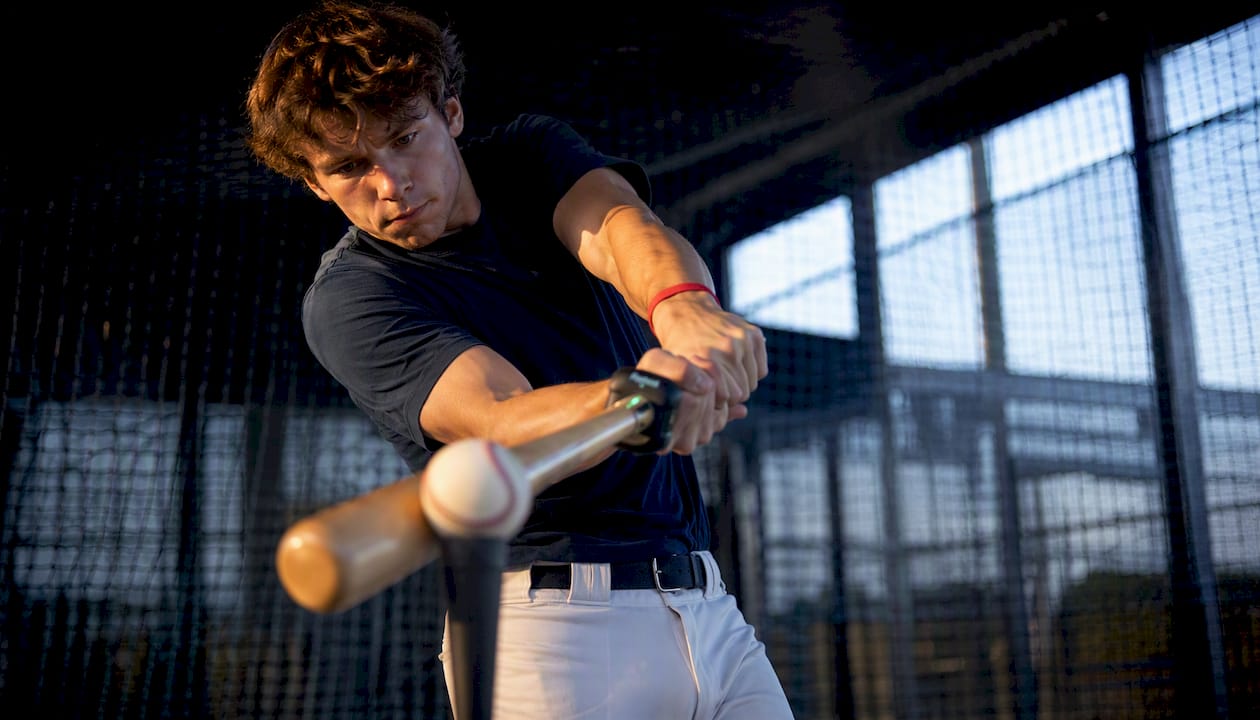
"caption": "Hitter testing bat speed at contact"
},
"author": {
"url": "https://nationalscoutingbureau.com",
"name": "Nationalscoutingbureau",
"@type": "Organization"
},
"headline": "75 mph Isn’t Enough: Bat Speed Benchmarks Recruiters Trust",
"publisher": {
"url": "https://nationalscoutingbureau.com",
"name": "Nationalscoutingbureau",
"@type": "Organization"
},
"inLanguage": "en-US",
"description": "Age specific bat speed benchmarks and step by step measurement rules coaches and parents can use to verify and report numbers recruiters will trust.",
"dateModified": "2026-09-02T04:19:58.960Z",
"datePublished": "2026-09-02T04:19:58.960Z"
},
{
"@type": "BreadcrumbList",
"itemListElement": [
{
"item": "https://nationalscoutingbureau.com",
"name": "Nationalscoutingbureau",
"@type": "ListItem",
"position": 1
},
{
"item": "https://nationalscoutingbureau.com/bat-speed-benchmarks",
"name": "75 mph Isn’t Enough: Bat Speed Benchmarks Recruiters Trust",
"@type": "ListItem",
"position": 2
}
]
}
],
"@context": "https://schema.org"
}
</script>
<h1 id="75-mph-isnt-enough-bat-speed-benchmarks-recruiters-trust" tabindex="-1">75 mph Isn’t Enough: Bat Speed Benchmarks Recruiters Trust</h1>
<p><img src="https://csuxjmfbwmkxiegfpljm.supabase.co/storage/v1/object/public/blog-images/organization-34605/1788322735032_Hitter-testing-bat-speed-at-contact.jpeg" alt="Hitter testing bat speed at contact"></p>
<p>Youth hitters (8 to 10) swing in the low 40s to low 50s mph, middle schoolers land between 50 and 62 mph, high school varsity hitters run 60 to 70+ mph, and pro hitters average around 70 to 78+ mph at the bat’s sweet spot. Statcast flags anything at 75 mph or higher as a genuinely fast swing. Two things matter as much as the number itself: how it was measured, and whether that speed shows up as hard, on-plane contact in a live at bat.</p>
<hr>
<blockquote>
<p><strong>TL;DR:</strong></p>
<ul>
<li>Bat speed benchmarks vary significantly by age, with youth players hitting around 35-50 mph and pro hitters exceeding 75 mph at the highest level.</li>
<li>Measurement accuracy depends on sensor placement and condition, emphasizing the need for consistent testing protocols and contextual reporting.</li>
<li>Bat speed directly correlates with exit velocity, but contact quality and swing mechanics are better indicators of game power and production.</li>
<li>Training should prioritize swing path correction and rotational power before focusing on raw speed gains, with warm-ups also playing a crucial role.</li>
<li>Verified, context-rich measurements from professional evaluations offer more credible insights than single, unverified device readings.</li>
</ul>
</blockquote>
<hr>
<h2 id="table-of-contents" tabindex="-1">Table of Contents</h2>
<ul>
<li><a href="#bat-speed-benchmarks-by-age-and-competitive-level">Bat Speed Benchmarks by Age and Competitive Level</a></li>
<li><a href="#how-bat-speed-is-measured-and-why-your-number-might-be-wrong">How Bat Speed Is Measured (and Why Your Number Might Be Wrong)</a></li>
<li><a href="#what-bat-speed-actually-predicts-about-power">What Bat Speed Actually Predicts About Power</a></li>
<li><a href="#training-that-actually-raises-game-ready-bat-speed">Training That Actually Raises Game-Ready Bat Speed</a></li>
<li><a href="#youth-development-what-the-growth-curve-actually-looks-like">Youth Development: What the Growth Curve Actually Looks Like</a></li>
<li><a href="#choosing-the-right-bat-speed-measurement-tool">Choosing the Right Bat Speed Measurement Tool</a></li>
<li><a href="#national-scouting-bureaus-measurement-protocol">National Scouting Bureau’s Measurement Protocol</a></li>
<li><a href="#numbers-without-context-are-just-noise">Numbers Without Context Are Just Noise</a></li>
<li><a href="#get-your-bat-speed-verified-the-right-way">Get Your Bat Speed Verified the Right Way</a></li>
<li><a href="#sources">Sources</a></li>
</ul>
<h2 id="bat-speed-benchmarks-by-age-and-competitive-level" tabindex="-1">Bat Speed Benchmarks by Age and Competitive Level</h2>
<p>Every serious conversation about bat swing speed starts with the same question: compared to what? A 62 mph swing from a 13-year-old is elite. The same number from a college junior is a red flag. Context is everything, and the ranges below give you that context.</p>
<p>These bands come from large-sample tracking across youth, high school, college, and pro levels, cross-referenced against <a href="https://blastmotion.com/blog/what-is-bat-speed-in-baseball/?srsltid=AfmBOopLgu9IsTBvpk-qFlEsqyvQFP1Wfl3kjH0C-dnoHGuWAIboE_C4" rel="nofollow noopener noreferrer" target="_blank">Blast Motion’s benchmark data</a> and <a href="https://winreality.com/blog/bat-speed-by-age/?srsltid=AfmBOoqc5vir_ZQMdpggUJqes5bfF89XhjFUBzBHxHKpodyPvnRgAbgY" rel="nofollow noopener noreferrer" target="_blank">WinReality’s independent tracking</a>:</p>
<ul>
<li><strong>Youth, ages 8 to 10:</strong> roughly 35 to 50 mph, with most players clustering near the middle of that band as they’re still building core strength and swing mechanics.</li>
<li><strong>Youth advanced, ages 11 to 12:</strong> roughly 45 to 58 mph, where the first real gains from hip rotation and hand speed start to show.</li>
<li><strong>Middle school, ages 13 to 14:</strong> roughly 46 to 62 mph, matching Blast Motion’s tracked range for that age group.</li>
<li><strong>High school JV, ages 14 to 15:</strong> roughly 55 to 65 mph.</li>
<li><strong>High school varsity, ages 15 to 18:</strong> roughly 60 to 70+ mph, with Division I recruiting conversations typically starting near the upper end of that range.</li>
<li><strong>College:</strong> roughly 65 to 75 mph, with everyday lineup regulars at Power Conference programs frequently sitting above 70.</li>
<li><strong>Professional:</strong> roughly 66 to 78+ mph on average, and Statcast’s leaderboard shows the game’s hardest swingers, hitters like Ketel Marte and Junior Caminero, <a href="https://cronkitenews.azpbs.org/2026/04/09/bat-speed-training-mlb/" rel="nofollow noopener noreferrer" target="_blank">regularly clearing 75+ mph</a>.</li>
</ul>
<p>Recruiters rarely evaluate bat speed in a vacuum. A high school shortstop swinging 68 mph with clean on-plane mechanics and consistent exit velocity gets more looks than a 72 mph free swinger who whiffs on anything off-speed. Speed opens the conversation; contact quality closes it.</p>
<p>Softball follows a different curve because the swing plane and bat weight differ. Fast pitch hitters at the college level generally test lower on raw bat speed metrics than baseball counterparts, but their exit velocity relative to swing speed often runs comparable given differences in pitch speed and reaction windows. Don’t cross-apply baseball benchmarks to a softball athlete’s file.</p>
<p><img src="https://csuxjmfbwmkxiegfpljm.supabase.co/storage/v1/object/public/blog-images/organization-34605/1788322700482_Softball-hitter-demonstrating-swing-plane.jpeg" alt="Softball hitter demonstrating swing plane"></p>
<h2 id="how-bat-speed-is-measured-and-why-your-number-might-be-wrong" tabindex="-1">How Bat Speed Is Measured (and Why Your Number Might Be Wrong)</h2>
<p>Two hitters can swing identically and get two different readings depending on where the sensor sits. That’s the single biggest source of confusion in youth and high school bat speed measurements.</p>
<p>Statcast measures bat speed at the sweet spot, roughly six inches from the barrel end, which is the same contact point that actually drives the ball. <a href="https://baseballsavant.mlb.com/leaderboard/bat-tracking" rel="nofollow noopener noreferrer" target="_blank">Statcast’s own leaderboard methodology</a> treats 75 mph as the threshold for a fast swing. Knob-mounted sensors like Blast Motion attach near the handle and typically read differently than sweet-spot systems because they’re measuring a different point on the same arc. Radar guns pointed at the barrel introduce their own variance depending on angle and timing. None of these tools is “wrong.” They’re measuring different things, and comparing a knob-sensor reading to a Statcast number without adjusting for that is the most common mistake parents make when they start tracking numbers.</p>
<p>Getting a repeatable reading takes a simple protocol:</p>
<ol>
<li>Use the same bat and the same sensor placement every session.</li>
<li>Warm up fully before recording, since cold swings read slower and skew your baseline.</li>
<li>Take at least 8 to 10 competitive swings, not just your best three, and report the average alongside your top-end number.</li>
<li>Track live at bats separately from tee work. Tee speed almost always reads higher than live speed because there’s no pitch timing to account for.</li>
</ol>
<p><strong>Pro Tip:</strong> <em>When you send bat speed numbers to a recruiter, always include the device used, the context (tee, machine, or live), and your sample size. A single “78 mph” with no context gets far less credibility than “74 mph average across 10 live swings, tracked with a sweet-spot sensor.”</em></p>
<h2 id="what-bat-speed-actually-predicts-about-power" tabindex="-1">What Bat Speed Actually Predicts About Power</h2>
<p>Bat speed and exit velocity move together, but the relationship isn’t a clean formula. A 55 mph swing generally produces exit velocities somewhere in the 68 to 83 mph range. A 65 mph swing tends to land closer to 80 to 98 mph. A 75 mph swing can push exit velocity into the 92 to 112 mph range, according to WinReality’s mapping of swing speed to contact outcomes. Those are wide bands on purpose. Contact point, barrel accuracy, and pitch speed all shift where a hitter actually lands within that range.</p>
<blockquote>
<p><strong>The number that matters more than raw speed:</strong> <a href="https://blogs.fangraphs.com/early-notes-on-the-new-bat-speed-data-release/" rel="nofollow noopener noreferrer" target="_blank">FanGraphs’ analysis of new bat-tracking data</a> found that bat speed predicts power potential reliably only in small samples. Once you’re looking at a full season, barrel rate and contact quality explain hitting production far better than swing speed alone.</p>
</blockquote>
<p>That finding should reshape how coaches talk to hitters. A 3 mph bat speed gain over an off-season is a legitimate training win, and it <a href="https://nationalscoutingbureau.com/blog/why-bat-speed-translates-to-power-in-baseball" target="_blank" rel="noopener">translates to why bat speed matters for power</a> at every level. But if that gain doesn’t show up as harder, more consistent contact in games, it hasn’t yet transferred to production. Track both numbers side by side, not one instead of the other.</p>
<h2 id="training-that-actually-raises-game-ready-bat-speed" tabindex="-1">Training That Actually Raises Game-Ready Bat Speed</h2>
<p>Most swing-speed training programs get the order backwards. They chase raw mph before the hitter can deliver that speed on plane, which builds a fast swing that misses more often than it connects.</p>
<p>The sequence that transfers best to live hitting looks like this:</p>
<ul>
<li><strong>Fix the swing path first.</strong> On-plane efficiency of 70% or higher is widely considered the threshold where bat speed starts converting into consistent hard contact.</li>
<li><strong>Build rotational power second</strong>, through medicine ball throws, hip separation drills, and resisted rotation work.</li>
<li><strong>Add strength and lean-mass training third</strong>, once mechanics and rotational sequencing are sound.</li>
<li><strong>Layer in overload/underload bat training carefully.</strong> Alternating heavier and lighter bats can boost bar speed, but only in short blocks (two to three sessions per week, six to eight weeks) with a normal-weight bat used for live at bats in between.</li>
</ul>
<p>Warm-up matters more than most programs admit. A randomized comparison found that warming up with a dynamic moment-of-inertia bat produced a small but real increase in swing speed, averaging around 1.2 mph, compared to a traditional weighted-bat warm-up. That’s a modest gain, but it’s free, and it beats the common mistake of swinging a heavily weighted bat right before a game, which tends to slow the very swing it’s supposed to speed up.</p>
<p><strong>Pro Tip:</strong> <em>Measure transfer, not just speed. Track on-plane efficiency, time-to-contact, and live exit velocity every four to six weeks. If bat speed climbs but those three numbers don’t, the training block isn’t working yet, even if the radar gun says otherwise.</em></p>
<h2 id="youth-development-what-the-growth-curve-actually-looks-like" tabindex="-1">Youth Development: What the Growth Curve Actually Looks Like</h2>
<p>Swing speed doesn’t grow in a straight line through childhood. A study tracking 1,213 youth players found the growth curve peaks around age 10.25, meaning that’s the window where swing speed development accelerates fastest relative to age and height.</p>
<p>That same research found lean body mass correlates with swing speed, but muscle mass alone didn’t reliably predict actual batting statistics. Strength helps, but it’s not the whole story.</p>
<p>For coaches and parents, the practical takeaways are straightforward:</p>
<ul>
<li>Don’t panic if a 9-year-old’s swing speed looks flat. The steepest gains are still ahead.</li>
<li>Prioritize mechanics and bat-to-ball skill over raw mph before age 12. Speed without contact is just a fast strikeout.</li>
<li>Avoid heavy resistance or weighted-bat overload work with players under 13. Their growth plates and coordination aren’t ready for it.</li>
<li>Watch for early specialization pressure. A player who only swings a bat, without broader athletic development, tends to plateau earlier than one with varied movement training.</li>
</ul>
<h2 id="choosing-the-right-bat-speed-measurement-tool" tabindex="-1">Choosing the Right Bat Speed Measurement Tool</h2>
<p>Picking a sensor comes down to matching the tool to your program’s size and what you actually need the data for.</p>
<ul>
<li><strong>Knob-mounted sensors</strong> (Blast Motion and similar) are affordable, portable, and ideal for individual athletes and youth teams tracking session-to-session progress.</li>
<li><strong>Radar and optical systems</strong> offer more precision for programs running structured hitting evaluations, though they require more setup and space.</li>
<li><strong>Sweet-spot tracking at the Statcast level</strong> is the gold standard for pro and college programs, but it’s rarely accessible outside affiliated facilities.</li>
<li><strong>High-speed video paired with frame analysis</strong> works well for coaches who want to combine speed data with mechanical breakdown, and tools like <a href="https://clickcoach.io/coaching-progress-tracking-software" target="_blank" rel="noopener">ClickCoach’s progress-tracking software</a> help teams log those numbers session over session.</li>
</ul>
<p>Whatever you choose, consistency beats precision. A cheaper sensor used the same way every session beats an expensive one used inconsistently. When you’re building a report for recruiters, document the device, the sample size, and the context every time.</p>
<h2 id="national-scouting-bureaus-measurement-protocol" tabindex="-1">National Scouting Bureau’s Measurement Protocol</h2>
<p>The client evaluates hitters using technology that captures bat speed alongside exit velocity and swing mechanics in a single verified session rather than a self-reported number. That verification matters to college coaches sorting through thousands of highlight clips a year. Families who go through an NSB skills assessment walk away with:</p>
<ul>
<li>A documented metric packet showing bat speed, exit velocity, and context notes.</li>
<li>Video paired with the numbers, so recruiters see the swing, not just the stat.</li>
<li>Comparative context against age and level benchmarks.</li>
</ul>
<p>The client has supported a significant number of college placements and MLB draft picks. Reach out through the site to request a verified evaluation.</p>
<h2 id="numbers-without-context-are-just-noise" tabindex="-1">Numbers Without Context Are Just Noise</h2>
<p>The biggest mistake in youth baseball right now isn’t undertraining bat speed. It’s overtrusting a single number pulled from a single device on a single day. A dad texting a coach “my kid hit 68 mph” means almost nothing without knowing the sensor, the sample size, and whether that swing came off a tee or a live arm.</p>
<p><img src="https://csuxjmfbwmkxiegfpljm.supabase.co/storage/v1/object/public/blog-images/organization-34605/1788322793359_Numbers-Without-Context-Are-Just-Noise-overview-diagram.jpeg" alt="Numbers Without Context Are Just Noise — overview diagram"></p>
<p>Conventional advice tells parents to chase mph. The better advice is to chase <em>repeatable</em> mph, verified the same way every time, alongside contact quality. A hitter who swings 65 mph consistently with <a href="https://perfectswingsusa.com/blogs/news/why-speed-is-crucial-when-swinging-a-bat" rel="nofollow noopener noreferrer" target="_blank">75%</a> on-plane efficiency will out-produce a hitter who occasionally flashes 72 mph but connects on a fraction of his swings. FanGraphs’ own data backs this: speed predicts potential in small samples, but production over a season comes down to barrel rate and contact quality.</p>
<p>If you take one thing from these benchmarks, take this: measure the same way every time, report the context alongside the number, and treat bat speed as one input into a much bigger picture, not the whole scouting report. Families who understand that walk into recruiting conversations with credibility. Families who show up with an unverified “78 mph, trust me” usually don’t.</p>
<blockquote>
<p><em>— Coach</em></p>
</blockquote>
<h2 id="get-your-bat-speed-verified-the-right-way" tabindex="-1">Get Your Bat Speed Verified the Right Way</h2>
<p>Reading benchmark tables only gets you so far. If you actually want a number a college coach will trust, it needs to come from a verified session, not a phone app in the backyard. Nationalscoutingbureau is the alternative to guesswork for families who want a real, documented answer to “how fast is my kid’s bat, and does it hold up against the level he’s trying to reach.”</p>
<p><img src="https://csuxjmfbwmkxiegfpljm.supabase.co/storage/v1/object/public/blog-images/organization-34605/1780261783187_nationalscoutingbureau.jpg" alt="Nationalscoutingbureau"></p>
<p>The client’s evaluation uses tracking technology to capture bat speed, exit velocity, and swing mechanics in one verified session, contextualized against the age and level benchmarks covered above. Families walk away with:</p>
<ul>
<li>A documented metrics packet recruiters can actually trust.</li>
<li>Matching video tied to the numbers.</li>
<li>A benchmark comparison showing where the athlete stands against his level.</li>
</ul>
<p>With many college placements and MLB draft picks tied to its evaluation process, the client gives families a credible answer instead of a guess. <a href="https://nationalscoutingbureau.com" target="_blank" rel="noopener">Request a verified evaluation</a> and find out where your hitter’s numbers actually stand.</p>
<h2 id="sources" tabindex="-1">Sources</h2>
<ul>
<li><a href="https://baseballsavant.mlb.com/leaderboard/bat-tracking" rel="nofollow noopener noreferrer" target="_blank">Statcast Bat Tracking | baseballsavant.com - MLB.com</a></li>
<li><a href="https://blastmotion.com/blog/what-is-bat-speed-in-baseball/" rel="nofollow noopener noreferrer" target="_blank">What Is Bat Speed in Baseball? Age Benchmarks — Blast Motion</a></li>
<li><a href="https://blogs.fangraphs.com/early-notes-on-the-new-bat-speed-data-release/" rel="nofollow noopener noreferrer" target="_blank">Early notes on the new bat speed data release — FanGraphs</a></li>
<li><a href="https://winreality.com/blog/bat-speed-by-age/" rel="nofollow noopener noreferrer" target="_blank">Bat Speed by Age: Average MPH for Youth, High School & College Hitters — WinReality</a></li>
</ul>
<h2 id="recommended" tabindex="-1">Recommended</h2>
<ul>
<li><a href="https://nationalscoutingbureau.com/blog/why-bat-speed-translates-to-power-in-baseball" target="_blank" rel="noopener">Why Bat Speed Translates to Power in Baseball</a></li>
<li><a href="https://nationalscoutingbureau.com/blog/how-to-conduct-a-verified-baseball-skills-assessment" target="_blank" rel="noopener">How to Conduct a Verified Baseball Skills Assessment</a></li>
<li><a href="https://nationalscoutingbureau.com/blog/benefits-of-verified-performance-assessments-in-baseball" target="_blank" rel="noopener">Benefits of Verified Performance Assessments in Baseball</a></li>
</ul>