July 1, 2026 3 views news
Building Champions Baseball: A Parent's Development Guide
By BabyLoveGrowth.ai
<script type="application/ld+json">
{
"@type": "Article",
"image": {
"url": "https://csuxjmfbwmkxiegfpljm.supabase.co/storage/v1/object/public/blog-images/organization-34605/1782882399017_Youth-baseball-coach-overseeing-drills-outdoors.jpeg",
"@type": "ImageObject",
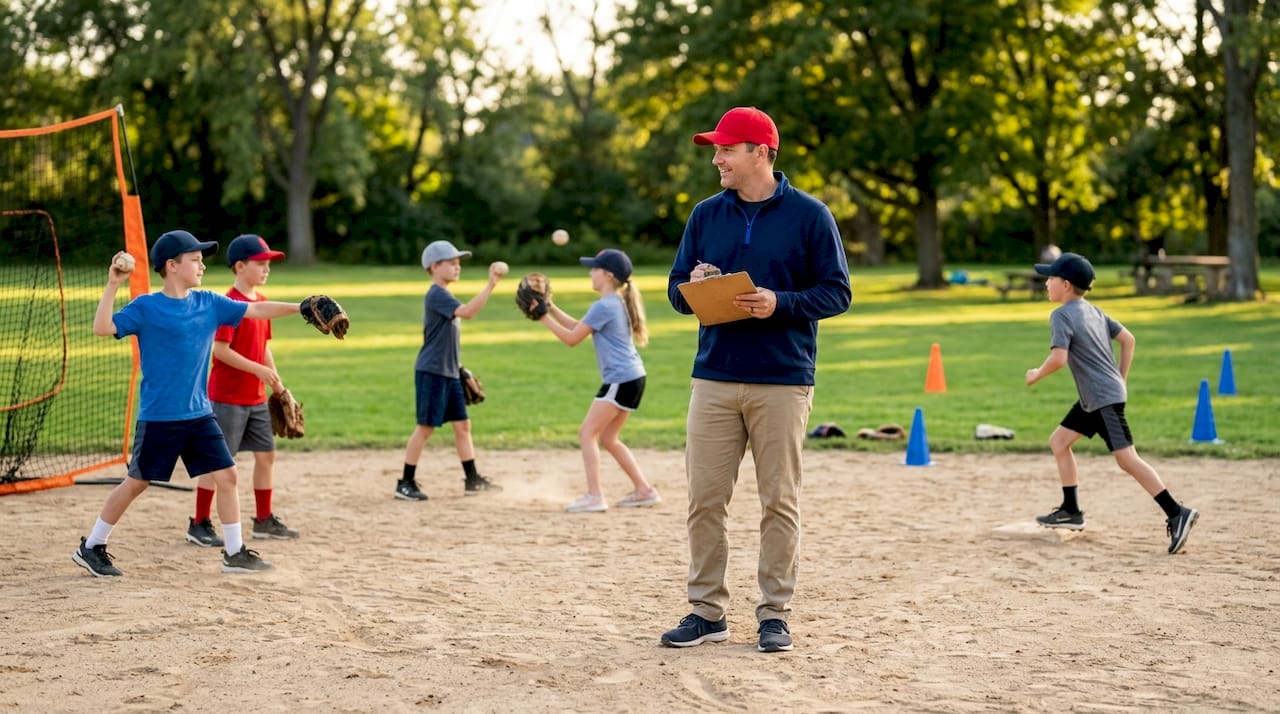
"caption": "Youth baseball coach overseeing drills outdoors"
},
"author": {
"url": "https://nationalscoutingbureau.com",
"name": "Nationalscoutingbureau",
"@type": "Organization"
},
"@context": "https://schema.org",
"headline": "Building Champions Baseball: A Parent's Development Guide",
"publisher": {
"url": "https://nationalscoutingbureau.com",
"name": "Nationalscoutingbureau",
"@type": "Organization"
},
"inLanguage": "en-US",
"description": "Discover how building champions baseball shapes youth players through structured training, enhancing skills and college recruitment readiness.",
"datePublished": "2026-07-01T05:06:50.978Z"
}
</script>
<h1 id="building-champions-baseball-a-parents-development-guide" tabindex="-1">Building Champions Baseball: A Parent’s Development Guide</h1>
<p><img src="https://csuxjmfbwmkxiegfpljm.supabase.co/storage/v1/object/public/blog-images/organization-34605/1782882399017_Youth-baseball-coach-overseeing-drills-outdoors.jpeg" alt="Youth baseball coach overseeing drills outdoors"></p>
<p>Building champions baseball is the methodical process of developing youth players through structured, age-appropriate training that builds skills, game intelligence, and college recruitment readiness simultaneously. Most parents focus on wins and batting averages. The programs that actually produce collegiate athletes focus on something harder to measure: deliberate, consistent development. The difference between a player who plateaus at 14 and one who earns a scholarship often comes down to how their early training was designed. <a href="https://nationalscoutingbureau.com/blog/next-level-baseball-skills-safety-and-recruiting" target="_blank" rel="noopener">Youth baseball training</a> built on clear principles produces athletes who grow season after season, not just kids who play games.</p>
<h2 id="how-does-building-champions-baseball-structure-practice-sessions" tabindex="-1">How does building champions baseball structure practice sessions?</h2>
<p>The most common mistake in youth baseball coaching is treating practice as an unstructured collection of drills. A <a href="https://mindandmuscle.ai/youth-baseball-coaching-guide" rel="nofollow noopener noreferrer" target="_blank">single session theme</a> keeps players mentally locked in and prevents the aimless rep-grinding that kills motivation fast.</p>
<p>The gold standard for managing groups of 12 or more players is the three-station rotation model. Each station runs in <a href="https://richardlemon.com/u12-baseball-practice-19-kids-attention/" rel="nofollow noopener noreferrer" target="_blank">12-minute blocks</a>, structured as 2 minutes of demonstration followed by 10 minutes of repetitions and micro-feedback. That ratio matters because kids learn by doing, not by listening to long explanations.</p>
<p>Here is how a three-station rotation works in practice:</p>
<ol>
<li><strong>Station 1: Hitting mechanics.</strong> Players work tee drills or soft toss, focusing on one specific mechanical cue for the entire block.</li>
<li><strong>Station 2: Fielding fundamentals.</strong> Grounders, fly balls, or footwork patterns, depending on the session theme.</li>
<li><strong>Station 3: Baserunning or situational work.</strong> Decision-making drills that build game intelligence while keeping players physically active.</li>
</ol>
<p>A floating coach role is critical when running this model. One coach moves between stations to balance load, spot form breakdowns, and keep energy high. Without a floater, one station always gets neglected.</p>
<p><strong>Pro Tip:</strong> <em>Limit your instructional input to under 4 minutes per block, and deliver corrections within 30 seconds of the error. After 30 seconds, the player’s brain has already moved on.</em></p>
<p><a href="https://nationalscoutingbureau.com/blog/build-a-player-development-tracking-system-that-works" target="_blank" rel="noopener">Tracking progress</a> across sessions validates development and keeps young athletes motivated through a long season. Players who see documented improvement stay engaged. Players who just show up and grind without feedback eventually quit.</p>
<p><img src="https://csuxjmfbwmkxiegfpljm.supabase.co/storage/v1/object/public/blog-images/organization-34605/1782882121152_Coach-s-hands-tracking-baseball-progress.jpeg" alt="Coach's hands tracking baseball progress"></p>
<h2 id="what-are-the-right-training-principles-for-each-age-group" tabindex="-1">What are the right training principles for each age group?</h2>
<p>Age-appropriate youth baseball training is not just about adjusting difficulty. It is about matching the type of work to where a player’s brain and body actually are developmentally.</p>
<ul>
<li><strong>Ages 6–8:</strong> The entire focus is fun and coordination. Games, movement challenges, and basic throwing and catching patterns. Formal mechanics instruction at this stage does more harm than good because motor patterns are not yet stable enough to hold.</li>
<li><strong>Ages 9–12:</strong> Structured skill work begins here. Tee work, fielding stations, and position-specific fundamentals become appropriate. <a href="https://baseballrampage.com/youth-baseball-training-program-2026" rel="nofollow noopener noreferrer" target="_blank">At least 70% of practice time</a> should still feel like play for players under 12. That number is not a suggestion. It reflects how young athletes actually retain skills and stay motivated long-term.</li>
<li><strong>Ages 13–15:</strong> Position training, intro-level strength work, and competitive situational drills become the priority. Players at this stage can handle more repetition and more direct mechanical feedback.</li>
</ul>
<p>Safe strength training for youth players means bodyweight movements and light resistance with gradual progression. <a href="https://hittersbaseballacademy.com/baseball-strength-training-youth-players/" rel="nofollow noopener noreferrer" target="_blank">Stop any set immediately</a> upon form breakdown. Pushing through bad form at 13 does not build toughness. It builds injury patterns that derail careers at 16.</p>
<p>The balance between mechanical repetition and play is not just a feel-good philosophy. It is the structural reason why development-first programs produce more college-ready athletes than win-now programs. Players who enjoy the process stay in the sport long enough to get good at it.</p>
<p><img src="https://csuxjmfbwmkxiegfpljm.supabase.co/storage/v1/object/public/blog-images/organization-34605/1782882061281_Infographic-of-youth-baseball-training-principles-in-stages.jpeg" alt="Infographic of youth baseball training principles in stages"></p>
<h2 id="how-do-you-maximize-hitting-and-fielding-development-with-drills" tabindex="-1">How do you maximize hitting and fielding development with drills?</h2>
<p>Hitting development lives or dies on one principle: one mechanical focus per session. <a href="https://www.veo.com/en-us/article/youth-baseball-batting-cages" rel="nofollow noopener noreferrer" target="_blank">Focusing on a single point</a> per cage session, such as load timing or hip rotation, produces dramatically better results than trying to fix multiple aspects at once. The player’s brain can only integrate one new pattern at a time.</p>
<p>A sound hitting progression looks like this:</p>
<ul>
<li><strong>Tee work first.</strong> The tee removes timing pressure and lets the player groove the specific mechanical cue without distraction.</li>
<li><strong>Soft toss second.</strong> Introduces light timing demands while keeping the mechanical focus intact.</li>
<li><strong>Live pitching last.</strong> Only after the mechanical pattern is grooved does live pitching make sense as a training tool.</li>
</ul>
<p>Smartphone video analysis accelerates skill acquisition more than verbal instruction alone. Film your player from the side during tee work, then show them the clip immediately. Self-awareness built from visual feedback sticks far longer than a coach telling a kid to “stay back.”</p>
<p><strong>Pro Tip:</strong> <em>Record every tee session from the same angle and distance. After four weeks, compare the clips side by side. The visual proof of improvement is one of the most powerful motivators a young player can experience.</em></p>
<p>Fielding development follows the same focused structure. Run separate stations for grounders, fly balls, and footwork patterns rather than mixing them. Each skill requires different mental focus. Mixing them in one block dilutes both. Use <a href="https://nationalscoutingbureau.com/blog/set-measurable-baseball-improvement-goals-in-2026" target="_blank" rel="noopener">measurable improvement goals</a> to track fielding progress the same way you track hitting mechanics.</p>
<h2 id="why-does-situational-baseball-separate-good-players-from-great-ones" tabindex="-1">Why does situational baseball separate good players from great ones?</h2>
<p>Situational baseball is the most under-practiced area in youth programs, and it is also the area college coaches watch most closely. Physical tools get a player noticed. Game intelligence gets a player recruited.</p>
<p>Dedicating at least 10 minutes per session to situational baseball and baserunning builds the decision-making ability that separates good athletes from baseball players. Ten minutes sounds small. Across a full season, it compounds into hundreds of reps of game-speed thinking.</p>
<p>Common situational drills that belong in every practice:</p>
<ul>
<li><strong>First-and-third scenarios.</strong> Teach runners and defenders the reads and reactions simultaneously.</li>
<li><strong>Two-out baserunning.</strong> Players learn to read ball flight and get a good jump, not just run on contact.</li>
<li><strong>Cutoff and relay decisions.</strong> Outfielders and infielders learn to communicate and execute under pressure.</li>
<li><strong>Bunt defense rotations.</strong> Every infielder learns every role so substitutions never create confusion.</li>
</ul>
<p>The most common pitfall in youth programs is overloading batting practice and infield drills while skipping situational work entirely. A player who can hit .400 in practice but freezes on a first-and-third read is not a championship-caliber player yet.</p>
<table>
<thead>
<tr>
<th>Practice element</th>
<th>Recommended time per session</th>
</tr>
</thead>
<tbody>
<tr>
<td>Hitting stations</td>
<td>20–25 minutes</td>
</tr>
<tr>
<td>Fielding stations</td>
<td>20–25 minutes</td>
</tr>
<tr>
<td>Situational baseball</td>
<td>10 minutes minimum</td>
</tr>
<tr>
<td>Baserunning</td>
<td>10 minutes minimum</td>
</tr>
</tbody>
</table>
<p><a href="https://nationalscoutingbureau.com/blog/how-to-conduct-a-verified-baseball-skills-assessment" target="_blank" rel="noopener">Situational awareness</a> also shows up directly in verified skills assessments. Programs that practice game intelligence produce players who perform better under evaluation conditions, not just in scrimmages.</p>
<h2 id="key-takeaways" tabindex="-1">Key Takeaways</h2>
<p>Building champions baseball requires structured sessions, age-appropriate training, single-focus hitting work, and deliberate situational practice to develop college-ready athletes.</p>
<table>
<thead>
<tr>
<th>Point</th>
<th>Details</th>
</tr>
</thead>
<tbody>
<tr>
<td>Structure every session</td>
<td>Use a three-station rotation with 12-minute blocks to maximize reps and engagement.</td>
</tr>
<tr>
<td>Match training to age</td>
<td>Players under 12 need at least 70% play-based practice to stay motivated and develop long-term.</td>
</tr>
<tr>
<td>One mechanical focus per session</td>
<td>Fixing one hitting flaw per cage session produces faster improvement than addressing multiple issues.</td>
</tr>
<tr>
<td>Prioritize situational baseball</td>
<td>Dedicate at least 10 minutes per practice to baserunning and game-situation drills.</td>
</tr>
<tr>
<td>Document progress consistently</td>
<td>Tracked development motivates players and builds the verified record college coaches want to see.</td>
</tr>
</tbody>
</table>
<h2 id="what-ive-learned-from-watching-development-first-programs-win" tabindex="-1">What I’ve learned from watching development-first programs win</h2>
<p>The programs that consistently produce college-ready players share one trait: they resist the pressure to prioritize wins over growth. That sounds obvious. It is brutally hard to execute when parents are watching from the bleachers and the scoreboard is right there.</p>
<p>The coaches I respect most set the expectation with parents before the first practice. They say clearly: “We are building players, not just winning games this season.” That single conversation changes the entire dynamic. Parents stop measuring success by the score and start watching for the things that actually matter, like a kid reading a first-and-third correctly for the first time or staying back on an off-speed pitch.</p>
<p>The other thing I have seen consistently is that <a href="https://nationalscoutingbureau.com/blog/role-of-biomechanics-in-youth-sports-2026-guide" target="_blank" rel="noopener">biomechanics and modern technology</a> are not replacing great coaching. They are amplifying it. A coach who understands hip rotation and uses video to show a 13-year-old exactly what their swing looks like is ten times more effective than one relying on verbal cues alone. The players who get exposed to this kind of coaching early arrive at high school with a self-awareness that most of their peers lack entirely.</p>
<p>Parents, your job is not to coach from the stands. Your job is to reinforce the development culture at home. Ask your player what the one mechanical focus was in today’s session. Watch the video clips together. Celebrate the process, not just the results. The road to a college roster is forged in grit and consistency, not in one great tournament weekend.</p>
<blockquote>
<p><em>— Coach</em></p>
</blockquote>
<h2 id="nationalscoutingbureau-where-development-meets-recruitment" tabindex="-1">Nationalscoutingbureau: where development meets recruitment</h2>
<p>Your player is putting in the work. The next step is making sure the right people see it.</p>
<p><img src="https://csuxjmfbwmkxiegfpljm.supabase.co/storage/v1/object/public/blog-images/organization-34605/1780261783187_nationalscoutingbureau.jpg" alt="https://nationalscoutingbureau.com"></p>
<p>Nationalscoutingbureau is the nation’s fastest growing scouting organization, combining verified skills assessments with FlightScope technology to give college coaches the precise performance metrics they actually trust. With a track record of 600+ college placements and more than 20 MLB draft picks, Nationalscoutingbureau connects the development work your player is doing right now to the <a href="https://nationalscoutingbureau.com" target="_blank" rel="noopener">college recruitment opportunities</a> they are working toward. Families also earn up to 12,000 Tuition Rewards points per year, redeemable at over 400 participating colleges. Documented progress is not just motivating. It is the foundation of every successful recruitment story.</p>
<h2 id="faq" tabindex="-1">FAQ</h2>
<h3 id="what-is-building-champions-baseball" tabindex="-1">What is building champions baseball?</h3>
<p>Building champions baseball is a structured, development-first approach to youth player training that balances skill repetition, play-based engagement, and game intelligence to prepare athletes for competitive and collegiate baseball.</p>
<h3 id="how-much-of-youth-baseball-practice-should-be-play-based" tabindex="-1">How much of youth baseball practice should be play-based?</h3>
<p>For players under 12, at least 70% of total practice time should feel like play rather than mechanical repetition to maintain engagement and support long-term development.</p>
<h3 id="how-many-mechanical-points-should-a-coach-address-per-hitting-session" tabindex="-1">How many mechanical points should a coach address per hitting session?</h3>
<p>One. Focusing on a single mechanical point per batting cage session, such as load timing or hip rotation, produces significantly better skill acquisition than correcting multiple issues at once.</p>
<h3 id="how-long-should-coaches-spend-on-situational-baseball-per-practice" tabindex="-1">How long should coaches spend on situational baseball per practice?</h3>
<p>Coaches should dedicate at least 10 minutes per session to situational baseball and baserunning drills. That consistent investment builds the game intelligence college coaches prioritize in recruitment evaluations.</p>
<h3 id="when-should-youth-baseball-players-start-strength-training" tabindex="-1">When should youth baseball players start strength training?</h3>
<p>Players ages 13–15 can begin structured strength training with bodyweight movements and light resistance. Any set should stop immediately upon form breakdown to prevent injury and build safe, lasting physical development.</p>
<h2 id="recommended" tabindex="-1">Recommended</h2>
<ul>
<li><a href="https://nationalscoutingbureau.com/blog/next-level-baseball-skills-safety-and-recruiting" target="_blank" rel="noopener">NSB Scouting | The Nation’s Fastest Growing Scouting Organization</a></li>
<li><a href="https://nationalscoutingbureau.com/blog/the-complete-showcase-a-parents-recruitment-guide" target="_blank" rel="noopener">NSB Scouting | The Nation’s Fastest Growing Scouting Organization</a></li>
<li><a href="https://nationalscoutingbureau.com" target="_blank" rel="noopener">NSB Scouting | The Nation’s Fastest Growing Scouting Organization</a></li>
<li><a href="https://nationalscoutingbureau.com/blog/pitch-count-sheet-top-tools-for-coaches-in-2026" target="_blank" rel="noopener">NSB Scouting | The Nation’s Fastest Growing Scouting Organization</a></li>
</ul>