June 29, 2026 2 views news
How to Document Athlete Growth Over a Season
By BabyLoveGrowth.ai
<script type="application/ld+json">
{
"@type": "Article",
"image": {
"url": "https://csuxjmfbwmkxiegfpljm.supabase.co/storage/v1/object/public/blog-images/organization-34605/1782707594671_Coach-and-athlete-reviewing-training-progress.jpeg",
"@type": "ImageObject",
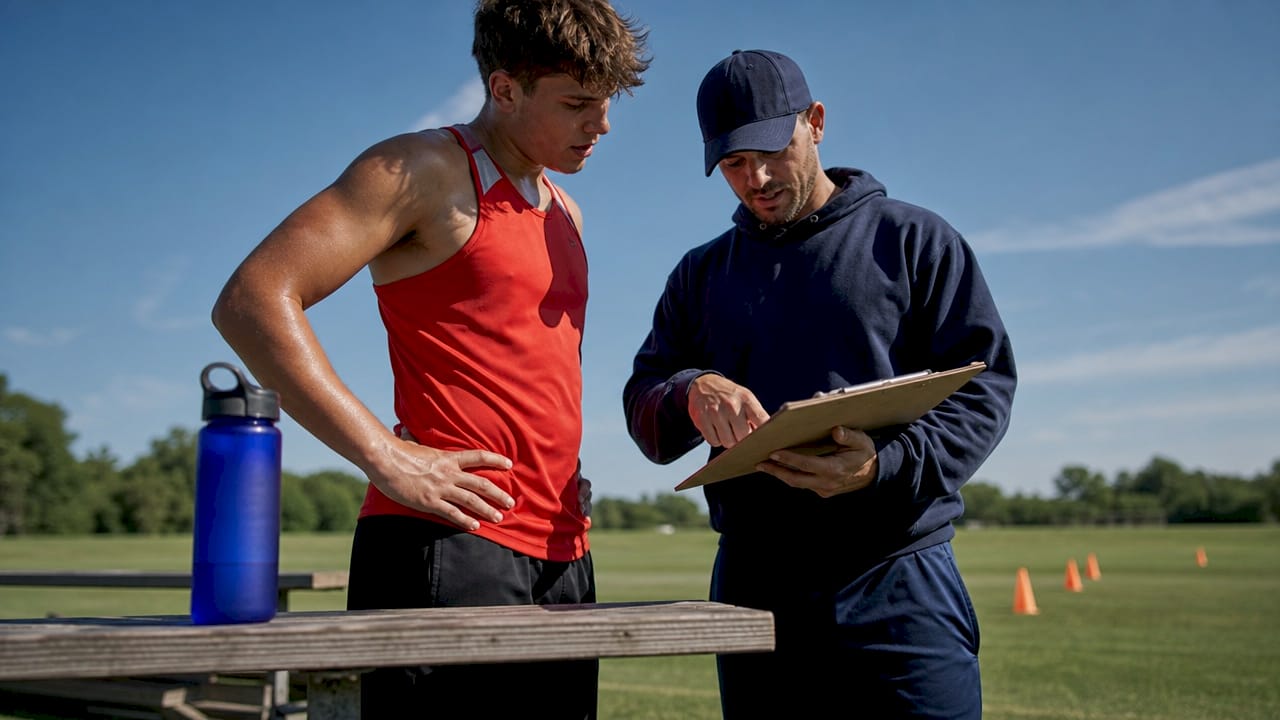
"caption": "Coach and athlete reviewing training progress"
},
"author": {
"url": "https://nationalscoutingbureau.com",
"name": "Nationalscoutingbureau",
"@type": "Organization"
},
"@context": "https://schema.org",
"headline": "How to Document Athlete Growth Over a Season",
"publisher": {
"url": "https://nationalscoutingbureau.com",
"name": "Nationalscoutingbureau",
"@type": "Organization"
},
"inLanguage": "en-US",
"description": "Learn how to document athlete growth over a season with game-by-game tracking. Gain insights for coaching and improve recruitment visibility.",
"datePublished": "2026-06-29T04:33:23.572Z"
}
</script>
<h1 id="how-to-document-athlete-growth-over-a-season" tabindex="-1">How to Document Athlete Growth Over a Season</h1>
<p><img src="https://csuxjmfbwmkxiegfpljm.supabase.co/storage/v1/object/public/blog-images/organization-34605/1782707594671_Coach-and-athlete-reviewing-training-progress.jpeg" alt="Coach and athlete reviewing training progress"></p>
<p>Documenting athlete growth over a season is the process of systematically tracking an athlete’s development through regular skill evaluations and performance monitoring to inform coaching decisions and showcase progress to recruiters. This is not a once-a-year snapshot. It is a living record built game by game, practice by practice, evaluation by evaluation. Parents and coaches who commit to this process give their athletes a measurable edge in both development and <a href="https://nationalscoutingbureau.com/blog/how-to-document-player-progress-season-long" target="_blank" rel="noopener">college recruitment visibility</a>. The standard industry term for this practice is longitudinal athlete monitoring, and it is the backbone of every serious development program.</p>
<h2 id="how-to-document-athlete-growth-over-a-season-with-the-right-tools" tabindex="-1">How to document athlete growth over a season with the right tools</h2>
<p>The foundation of any reliable tracking system is a full skill evaluation at the start of the season. From there, <a href="https://laceupsoccer.com/guides/youth-soccer-evaluation" rel="nofollow noopener noreferrer" target="_blank">shorter focused check-ins</a> every 2–4 weeks on 5–8 priority skills generate the trend data coaches actually need. Research confirms that at least 3 evaluations show reliable trends, while 5 or more support confident training decisions. That frequency is not optional if you want actionable data.</p>
<p>Physical performance metrics form the core of any evaluation. The most widely used battery includes:</p>
<ul>
<li><strong>20-meter sprint</strong> (acceleration and top-end speed)</li>
<li><strong>Countermovement jump, or CMJ</strong> (lower body power)</li>
<li><strong>Pro Agility test</strong> (change of direction)</li>
<li><strong>30-15 Intermittent Fitness Test, or IFT</strong> (sport-specific aerobic capacity)</li>
</ul>
<p>These four metrics, used in studies with athletes aged 9–19, give coaches a <a href="https://doi.org" rel="nofollow noopener noreferrer" target="_blank">multi-dimensional performance picture</a> that a single game observation never can.</p>
<p>Digital tracking beats paper every time. <a href="https://playerfocus.ca/standard/tools/evaluation-scorecard" rel="nofollow noopener noreferrer" target="_blank">Paper scorecards get lost</a>, degrade, and cannot be searched or compared across seasons. A digital system, whether a dedicated athlete management platform or a structured spreadsheet, creates a permanent, searchable record. That record becomes a recruitment asset.</p>
<p><img src="https://csuxjmfbwmkxiegfpljm.supabase.co/storage/v1/object/public/blog-images/organization-34605/1782707525440_Coach-reviewing-athlete-evaluation-data.jpeg" alt="Coach reviewing athlete evaluation data"></p>
<table>
<thead>
<tr>
<th>Evaluation Type</th>
<th>Frequency</th>
<th>Focus</th>
</tr>
</thead>
<tbody>
<tr>
<td>Full skill evaluation</td>
<td>Once per season (start)</td>
<td>All core competencies</td>
</tr>
<tr>
<td>Priority skill check-in</td>
<td>Every 2–4 weeks</td>
<td>5–8 targeted skills</td>
</tr>
<tr>
<td>Physical performance test</td>
<td>Monthly</td>
<td>Sprint, jump, agility, fitness</td>
</tr>
<tr>
<td>Self and coach assessment</td>
<td>Each evaluation cycle</td>
<td>Perception alignment</td>
</tr>
</tbody>
</table>
<p><img src="https://csuxjmfbwmkxiegfpljm.supabase.co/storage/v1/object/public/blog-images/organization-34605/1782707452829_Infographic-showing-season-evaluation-steps-and-timeline.jpeg" alt="Infographic showing season evaluation steps and timeline"></p>
<p><strong>Pro Tip:</strong> <em>Set your evaluation calendar before the season starts. Block the dates in your phone and treat them like game days. Consistency in timing is what makes the data comparable.</em></p>
<h2 id="why-biological-maturity-changes-how-you-read-the-numbers" tabindex="-1">Why biological maturity changes how you read the numbers</h2>
<p>Raw scores lie if you read them without context. Physical performance metrics like sprint, jump, and agility are heavily influenced by biological maturity and chronological age, meaning two athletes of the same age can be at completely different developmental stages. A 14-year-old who is biologically 16 will outperform a peer who is biologically 12, and that gap has nothing to do with talent or effort.</p>
<p>Coaches and parents need to understand a few key principles:</p>
<ul>
<li><strong>Predicted adult height percentage</strong> is a practical maturity indicator. An athlete at 85% of predicted adult height is in a different growth phase than one at 95%.</li>
<li><strong>Early maturers</strong> often show dominant physical scores in youth sports but may plateau as peers catch up.</li>
<li><strong>Late maturers</strong> frequently get undervalued in single-point assessments, even though their long-term ceiling is just as high.</li>
<li><strong>Absolute scores</strong> compared against team averages can mask real growth in athletes who are simply developing on a different timeline.</li>
</ul>
<blockquote>
<p>“Tracking improvement against an athlete’s own baseline, rather than ranking them against peers, is the only fair and accurate way to assess development.” — Youth Soccer Evaluation Guide, 2026 Edition</p>
</blockquote>
<p>Adjusting training plans based on maturity phase is not just fair. It is effective. An athlete in peak height velocity, the period of fastest growth, needs different loading and skill work than one who has already passed through it. Ignoring this produces both bad data and bad training.</p>
<h2 id="how-to-conduct-evaluations-and-keep-documentation-consistent" tabindex="-1">How to conduct evaluations and keep documentation consistent</h2>
<p>Consistency is the variable that separates useful data from noise. A well-run evaluation system follows a clear rhythm and does not skip steps when the season gets busy.</p>
<ol>
<li>
<p><strong>Schedule all evaluation dates before day one of the season.</strong> Lock in the full evaluation at the start, then mark every 2–4 week check-in on the calendar. Treat these dates as non-negotiable.</p>
</li>
<li>
<p><strong>Run the full evaluation first.</strong> Cover all core competencies: technical skills, physical metrics, tactical awareness, and psychological resilience. <a href="https://footballgpt.co/blog/scouting-player-potential-a-training-session-guide" rel="nofollow noopener noreferrer" target="_blank">Training session evaluations</a> reveal decision-making, work rate, and adaptability that match-day observation misses entirely.</p>
</li>
<li>
<p><strong>Use dual assessments at every check-in.</strong> Have the coach score the athlete, then have the athlete score themselves on the same rubric. <a href="https://www.nexusfutbol.com/playerevaluation.html" rel="nofollow noopener noreferrer" target="_blank">Dual evaluation systems</a> build self-awareness and align athlete and coach perceptions, which drives stronger goal-setting.</p>
</li>
<li>
<p><strong>Record everything digitally immediately after each session.</strong> Do not rely on memory or handwritten notes that get transferred later. Enter data the same day.</p>
</li>
<li>
<p><strong>Generate a brief progress report after each check-in.</strong> Share it with the athlete and the parents. One page is enough. Show the trend line, highlight what improved, and name the one or two skills to focus on next.</p>
</li>
<li>
<p><strong>Review the full season record at the end of the year.</strong> Compare the opening evaluation to the final check-in. That arc is your recruitment story.</p>
</li>
</ol>
<p><strong>Pro Tip:</strong> <em>Use a shared digital folder that both the coach and the athlete’s family can access. Transparency builds trust and keeps everyone pulling in the same direction.</em></p>
<h2 id="what-are-the-most-common-challenges-in-tracking-athlete-growth" tabindex="-1">What are the most common challenges in tracking athlete growth?</h2>
<p>The biggest mistake coaches make is treating the end-of-season showcase as a development evaluation. Showcases are performance events, not development tools. They capture a single moment, not a trajectory. A player who peaks in october but struggled in july looks identical to a player who improved steadily all season, and recruiters cannot tell the difference without documentation.</p>
<p>Other common pitfalls include:</p>
<ul>
<li><strong>Infrequent check-ins.</strong> One or two evaluations per season produce data points, not trends. Trends require frequency.</li>
<li><strong>Paper-only records.</strong> Notebooks disappear. Binders get left in gyms. Digital records do not.</li>
<li><strong>Comparing athletes to each other instead of to their own baseline.</strong> This discourages late maturers and gives early maturers false confidence.</li>
<li><strong>Ignoring the psychological and tactical dimensions.</strong> Physical metrics alone miss half the picture. Decision-making under pressure and attitude in training are key indicators of potential.</li>
</ul>
<blockquote>
<p>“Digitizing evaluation data is critical to building a permanent multi-year development record that supports recruitment visibility.” — Player Focus Evaluation Scorecard</p>
</blockquote>
<p>Getting athlete buy-in matters as much as the data itself. When athletes understand why they are being evaluated and see their own progress reflected in the numbers, they engage more seriously with training. Show them the trend line. Let them own it.</p>
<h2 id="how-does-season-long-documentation-support-recruitment" tabindex="-1">How does season-long documentation support recruitment?</h2>
<p>Recruiters and college coaches see hundreds of athletes at showcases and tournaments. What separates a memorable prospect from a forgotten face is a documented improvement curve. A single strong performance is interesting. A record showing consistent growth across an entire season is compelling.</p>
<p>The advantages of thorough documentation for recruitment include:</p>
<ul>
<li><strong>A verifiable development narrative.</strong> Coaches can present data showing where an athlete started, what they worked on, and how far they came.</li>
<li><strong>Evidence of coachability.</strong> Consistent improvement across multiple evaluation cycles signals that an athlete responds to instruction and puts in the work.</li>
<li><strong>Personalized training adjustments.</strong> Season-long data reveals which skills respond to training and which need a different approach, making future development more targeted.</li>
<li><strong>Long-term planning.</strong> Multi-year records, built by digitizing evaluation data, give both coaches and families a clear picture of an athlete’s development arc heading into high school and beyond.</li>
</ul>
<p>Nationalscoutingbureau has facilitated over 600 college placements and more than 20 MLB draft picks by combining verified scouting with documented performance data. That track record reflects exactly what consistent, professional documentation makes possible. Families who use <a href="https://nationalscoutingbureau.com/blog/what-is-player-tracking-technology-for-athletes" target="_blank" rel="noopener">player tracking technology</a> alongside verified scouting give their athletes the clearest path to recruitment visibility.</p>
<h2 id="key-takeaways" tabindex="-1">Key takeaways</h2>
<p>Consistent, digitized, maturity-aware documentation across a full season is the most effective way to evaluate player growth and build a recruitment-ready development record.</p>
<table>
<thead>
<tr>
<th>Point</th>
<th>Details</th>
</tr>
</thead>
<tbody>
<tr>
<td>Evaluate early and often</td>
<td>Run a full evaluation at season start, then check in every 2–4 weeks on priority skills.</td>
</tr>
<tr>
<td>Digitize every record</td>
<td>Paper records get lost; digital files create a permanent, searchable multi-year development history.</td>
</tr>
<tr>
<td>Account for biological maturity</td>
<td>Read physical metrics against an athlete’s maturity stage, not just their age or peer scores.</td>
</tr>
<tr>
<td>Use dual assessments</td>
<td>Coach and athlete self-scoring together builds ownership and aligns development goals.</td>
</tr>
<tr>
<td>Build a recruitment narrative</td>
<td>A documented improvement curve across a season tells recruiters a story a single showcase never can.</td>
</tr>
</tbody>
</table>
<h2 id="what-ive-learned-from-years-of-watching-athletes-get-overlooked" tabindex="-1">What I’ve learned from years of watching athletes get overlooked</h2>
<p>The athletes who get recruited are not always the most talented ones in the gym. They are the ones whose coaches can walk into a conversation with a college program and say, “Here is where he started in september, here is what we worked on, and here is where he is now.” That story, backed by numbers, changes the room.</p>
<p>I have watched late maturers get cut from programs because a single evaluation caught them at the wrong moment in their growth. And I have watched those same athletes, properly tracked and advocated for, land college spots two years later because a coach had the data to prove the trajectory. The tracking is not bureaucracy. It is the defense of an athlete’s future.</p>
<p>The shift to digital tools has changed everything. Coaches who used to rely on memory and handwritten notes now have season-long records they can pull up on a phone in a recruiting conversation. That accessibility matters. A <a href="https://nationalscoutingbureau.com/blog/what-is-verified-player-assessment-for-student-athletes" target="_blank" rel="noopener">verified player assessment</a> carries weight precisely because it is documented, consistent, and independent.</p>
<p>My strongest advice: track improvement against the athlete’s own baseline, not against the kid next to them. That mindset shift alone will change how you coach, how you communicate with families, and how you present your athletes to the world.</p>
<blockquote>
<p><em>— Coach</em></p>
</blockquote>
<h2 id="nationalscoutingbureau-professional-support-for-season-long-athlete-development" tabindex="-1">Nationalscoutingbureau: professional support for season-long athlete development</h2>
<p>Parents and coaches who want to take their documentation to the next level have a proven partner in Nationalscoutingbureau. NSB combines verified scouting with FlightScope technology to deliver performance metrics that college coaches trust, turning a season of hard work into a recruitment-ready profile.</p>
<p><img src="https://csuxjmfbwmkxiegfpljm.supabase.co/storage/v1/object/public/blog-images/organization-34605/1780261783187_nationalscoutingbureau.jpg" alt="https://nationalscoutingbureau.com"></p>
<p>NSB’s system supports up to 12,000 Tuition Rewards points per year at over 400 participating colleges, making the investment in proper documentation pay off in real dollars. With a record of 600+ college placements, NSB knows what recruiters want to see and how to present it. Visit <a href="https://nationalscoutingbureau.com" target="_blank" rel="noopener">Nationalscoutingbureau</a> to learn how verified scouting and season-long performance tracking can work together for your athlete.</p>
<h2 id="faq" tabindex="-1">FAQ</h2>
<h3 id="what-does-it-mean-to-document-athlete-growth-over-a-season" tabindex="-1">What does it mean to document athlete growth over a season?</h3>
<p>Documenting athlete growth over a season means systematically recording an athlete’s skill evaluations and physical performance metrics at regular intervals throughout a competitive season. The goal is to build a trend-based development record rather than relying on a single performance snapshot.</p>
<h3 id="how-often-should-coaches-evaluate-athletes-during-the-season" tabindex="-1">How often should coaches evaluate athletes during the season?</h3>
<p>At least 3 evaluations per season show reliable trends, while 5 or more support confident training decisions. A full evaluation at the start of the season, followed by focused check-ins every 2–4 weeks, is the recommended structure.</p>
<h3 id="why-does-biological-maturity-matter-when-tracking-athletic-performance" tabindex="-1">Why does biological maturity matter when tracking athletic performance?</h3>
<p>Biological maturity significantly influences sprint, jump, and agility scores, meaning two athletes of the same age can perform very differently based on their growth stage. Comparing athletes only to their own baseline, rather than to peers, produces a more accurate and fair assessment.</p>
<h3 id="how-does-season-long-documentation-help-with-college-recruitment" tabindex="-1">How does season-long documentation help with college recruitment?</h3>
<p>A documented improvement curve across a full season gives college coaches evidence of coachability, work ethic, and consistent development. A single showcase performance cannot communicate what a season of tracked progress can.</p>
<h3 id="what-is-the-best-way-to-keep-athlete-evaluation-records-organized" tabindex="-1">What is the best way to keep athlete evaluation records organized?</h3>
<p>Digitizing all evaluation data is the most reliable method. Digital records do not get lost, can be accessed anywhere, and support multi-year comparisons that are valuable for both development planning and recruitment conversations.</p>
<h2 id="recommended" tabindex="-1">Recommended</h2>
<ul>
<li><a href="https://nationalscoutingbureau.com/blog/how-to-document-player-progress-season-long" target="_blank" rel="noopener">NSB Scouting | The Nation’s Fastest Growing Scouting Organization</a></li>
<li><a href="https://nationalscoutingbureau.com/blog/technology-tools-for-youth-athlete-assessment-in-2026" target="_blank" rel="noopener">NSB Scouting | The Nation’s Fastest Growing Scouting Organization</a></li>
<li><a href="https://nationalscoutingbureau.com/blog/how-performance-benchmarks-are-set-for-athletes" target="_blank" rel="noopener">NSB Scouting | The Nation’s Fastest Growing Scouting Organization</a></li>
<li><a href="https://nationalscoutingbureau.com/blog/pitch-count-sheet-top-tools-for-coaches-in-2026" target="_blank" rel="noopener">NSB Scouting | The Nation’s Fastest Growing Scouting Organization</a></li>
</ul>