August 17, 2026 15 views news
Strength Benchmarks Youth Catchers Need to Get Recruited
By BabyLoveGrowth.ai
<script type="application/ld+json">
{
"@graph": [
{
"@type": "Article",
"image": {
"url": "https://csuxjmfbwmkxiegfpljm.supabase.co/storage/v1/object/public/blog-images/organization-34605/1786958067438_Youth-baseball-catcher-throwing-with-focus-on-pop-time.jpeg",
"@type": "ImageObject",
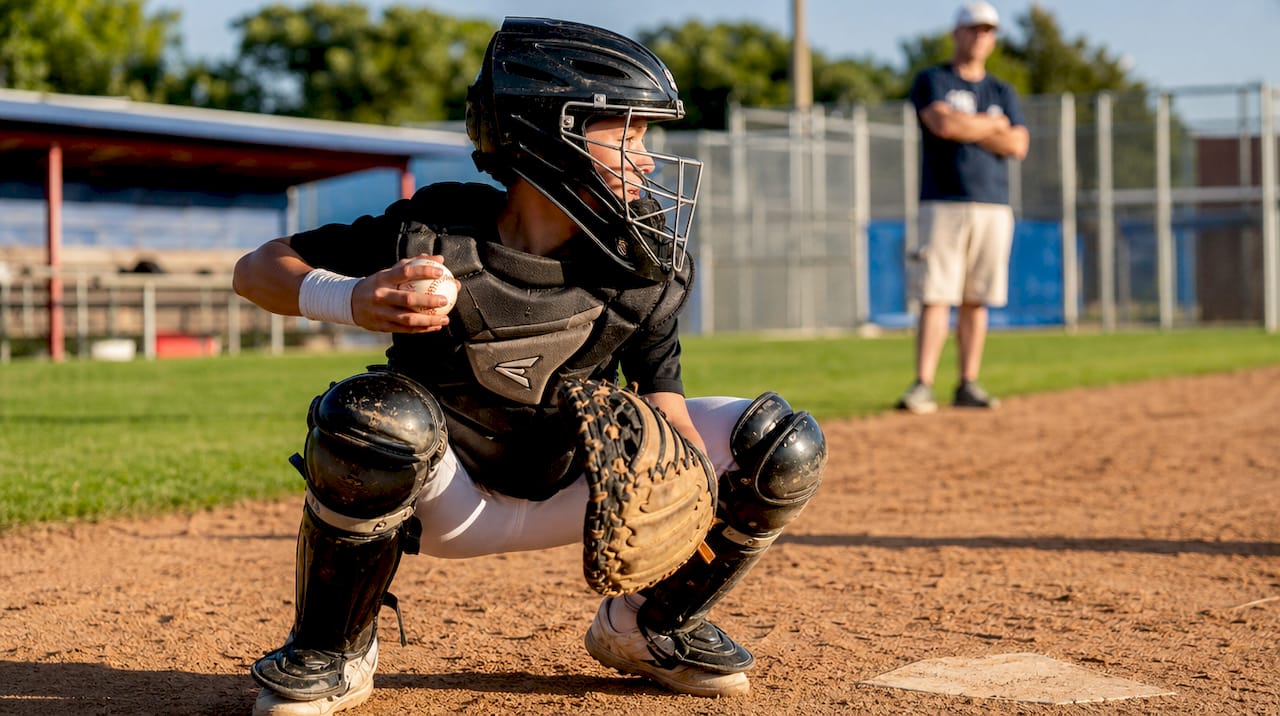
"caption": "Youth baseball catcher throwing with focus on pop time"
},
"author": {
"url": "https://nationalscoutingbureau.com",
"name": "Nationalscoutingbureau",
"@type": "Organization"
},
"headline": "Strength Benchmarks Youth Catchers Need to Get Recruited",
"publisher": {
"url": "https://nationalscoutingbureau.com",
"name": "Nationalscoutingbureau",
"@type": "Organization"
},
"inLanguage": "en-US",
"description": "Discover the essential strength benchmarks youth catchers need to impress college scouts, including key metrics and testing methods.",
"dateModified": "2026-08-17T09:14:37.767Z",
"datePublished": "2026-08-17T09:14:37.767Z"
},
{
"@type": "BreadcrumbList",
"itemListElement": [
{
"item": "https://nationalscoutingbureau.com",
"name": "Nationalscoutingbureau",
"@type": "ListItem",
"position": 1
},
{
"item": "https://nationalscoutingbureau.com/strength-benchmarks-youth-catchers-need",
"name": "Strength Benchmarks Youth Catchers Need to Get Recruited",
"@type": "ListItem",
"position": 2
}
]
}
],
"@context": "https://schema.org"
}
</script>
<h1 id="strength-benchmarks-youth-catchers-need-to-get-recruited" tabindex="-1">Strength Benchmarks Youth Catchers Need to Get Recruited</h1>
<p><img src="https://csuxjmfbwmkxiegfpljm.supabase.co/storage/v1/object/public/blog-images/organization-34605/1786958067438_Youth-baseball-catcher-throwing-with-focus-on-pop-time.jpeg" alt="Youth baseball catcher throwing with focus on pop time"></p>
<p>To get college coaches to look twice, a catcher needs three verified numbers: pop time, glove-to-hand release time, and crow-hop versus in-crouch throw velocity. Youth catchers should chase a pop time under 2.30 seconds, high school varsity prospects target <strong>2.00–2.20 seconds</strong>, and college-competitive throwers live in the <a href="https://baseballscouter.com/what-is-catcher-pop-time/" rel="nofollow noopener noreferrer" target="_blank">1.93–2.05 second range</a>. Every number needs a method behind it.</p>
<ul>
<li><strong>Test method:</strong> six throws, drop the fastest and slowest, average the middle four</li>
<li><strong>Documentation:</strong> timestamped video, radar-gun or FlightScope readout, and a written test protocol</li>
<li><strong>Report to coaches:</strong> average pop time, best pop time, average release time, crow-hop max velocity vs. in-crouch velocity, an accuracy note, and a video link</li>
</ul>
<p><strong>Pro Tip:</strong> <em>A single “best throw” number means nothing to a scout without the five throws around it. Consistency is what separates a recruitable catcher from a lucky one.</em></p>
<h2 id="key-takeaways" tabindex="-1">Key Takeaways</h2>
<p>Verified pop time, release time, and crow-hop-versus-in-crouch velocity, tested with a six-throw protocol and backed by video, are what turn a youth catcher’s stats into recruiting evidence coaches trust.</p>
<table>
<thead>
<tr>
<th>Point</th>
<th>Details</th>
</tr>
</thead>
<tbody>
<tr>
<td>Lead with pop time</td>
<td>Report average and best pop time from a six-throw set, middle four averaged.</td>
</tr>
<tr>
<td>Isolate the transfer</td>
<td>Use the tarp stopwatch method to measure glove-to-air release time separately from velocity.</td>
</tr>
<tr>
<td>Watch the velocity gap</td>
<td>A drop of more than 3% between crow-hop and in-crouch velocity flags mechanical leakage.</td>
</tr>
<tr>
<td>Test strength qualities together</td>
<td>Pair grip strength, medicine ball throws, and vertical jump results with your timed numbers, not as standalone stats.</td>
</tr>
<tr>
<td>Verify with Nationalscoutingbureau</td>
<td>NSB’s FlightScope-based assessments and verified reports give coaches a standardized, trusted packet backed by 600+ college placements.</td>
</tr>
</tbody>
</table>
<h2 id="table-of-contents" tabindex="-1">Table of Contents</h2>
<ul>
<li><a href="#what-scouts-and-college-coaches-actually-evaluate-on-a-catcher">What Scouts and College Coaches Actually Evaluate on a Catcher</a></li>
<li><a href="#how-to-measure-pop-time-release-time-and-velocity-like-a-scout">How to Measure Pop Time, Release Time, and Velocity Like a Scout</a></li>
<li><a href="#strength-benchmarks-youth-catchers-need-by-level">Strength Benchmarks Youth Catchers Need by Level</a></li>
<li><a href="#the-three-part-throw-evaluation-every-family-should-run">The Three-Part Throw Evaluation Every Family Should Run</a></li>
<li><a href="#practice-priorities-that-actually-lower-pop-time">Practice Priorities That Actually Lower Pop Time</a></li>
<li><a href="#tools-and-verification-that-make-your-numbers-credible">Tools and Verification That Make Your Numbers Credible</a></li>
<li><a href="#strength-and-conditioning-benchmarks-that-support-better-throws">Strength and Conditioning Benchmarks That Support Better Throws</a></li>
<li><a href="#standardized-tests-that-translate-to-throwing-performance">Standardized Tests That Translate to Throwing Performance</a></li>
<li><a href="#reading-strength-metrics-the-way-a-recruiter-does">Reading Strength Metrics the Way a Recruiter Does</a></li>
<li><a href="#age-appropriate-testing-and-safety-considerations">Age-Appropriate Testing and Safety Considerations</a></li>
<li><a href="#presenting-your-data-so-recruiters-actually-read-it">Presenting Your Data So Recruiters Actually Read It</a></li>
<li><a href="#get-your-numbers-verified-where-coaches-actually-look">Get Your Numbers Verified Where Coaches Actually Look</a></li>
<li><a href="#sources">Sources</a></li>
<li><a href="#faq">FAQ</a></li>
</ul>
<h2 id="what-scouts-and-college-coaches-actually-evaluate-on-a-catcher" tabindex="-1">What Scouts and College Coaches Actually Evaluate on a Catcher</h2>
<p>Coaches don’t watch one throw and make a decision. They’re tracking a sequence: receive, transfer, release, flight, and accuracy on the tag side. Footwork and blocking show up too, but those are context, not the headline metric.</p>
<p>Pop time exists because it compresses that whole sequence, receive through catch at second, into one number recruiters can compare across hundreds of players. It’s the shorthand for “can this kid control a running game,” and it’s why <a href="https://www.mlb.com/news/statcast-adds-pop-time-exchange-arm-strength-c268064274" rel="nofollow noopener noreferrer" target="_blank">Statcast built its entire catcher-evaluation framework</a> around it.</p>
<p>What actually moves a recruiting conversation:</p>
<ul>
<li>Pop time (the number every coach asks for first)</li>
<li>Consistency across throws, not just a personal-best</li>
<li>Accuracy to the tag side, since a fast throw that sails into center field doesn’t record an out</li>
<li>Velocity splits and pitch-location notes, which add credibility but don’t replace the core number</li>
</ul>
<p><strong>Pro Tip:</strong> <em>If you only report one throw, a coach will assume it was your best day. Report the average. It’s more believable and it’s what recruiters actually trust.</em></p>
<h2 id="how-to-measure-pop-time-release-time-and-velocity-like-a-scout" tabindex="-1">How to Measure Pop Time, Release Time, and Velocity Like a Scout</h2>
<p>Numbers without a method get ignored. Here’s the protocol that produces results coaches will actually believe.</p>
<ol>
<li><strong>Pop time.</strong> Warm up fully, then have a pitcher throw live to your receiving zone. Start the watch at mitt contact, stop it when the infielder catches the ball at second. Run six throws, drop the high and low, and average the middle four, a low-noise approach <a href="https://hittingworld.com/products/evaluating-a-catchers-release" rel="nofollow noopener noreferrer" target="_blank">practitioner testing databases rely on</a> to keep results comparable across players.</li>
<li><strong>Release time (glove-to-air).</strong> Use the 10-foot tarp method: lay a tarp or marked line 10 feet in front of home plate, and time strictly from glove contact to the ball leaving your hand. This isolates the exchange and keeps raw arm strength from masking a slow transfer.</li>
<li><strong>Velocity, two ways.</strong> Run a crow-hop max-velocity series (six throws, drop the high/low, average) and a separate in-crouch throw-down series. Compare the two. <a href="https://baseballtips.com/evaluating-a-catchers-throw-to-2nd/" rel="nofollow noopener noreferrer" target="_blank">A drop of more than 3% between crow-hop and in-crouch</a> usually signals leakage in footwork or transfer, not a strength problem.</li>
<li><strong>Accuracy.</strong> Score each throw as a tag-side hit or miss, and log pitch type and location so results are comparable session to session.</li>
</ol>
<p><strong>Pro Tip:</strong> <em>Log pitch location every time. A pop time recorded off a fastball down the middle isn’t the same data point as one off a curveball in the dirt, and mixing them makes your averages meaningless.</em></p>
<h2 id="strength-benchmarks-youth-catchers-need-by-level" tabindex="-1">Strength Benchmarks Youth Catchers Need by Level</h2>
<p>Coaches don’t grade youth players against big-league numbers, but they do want to see where a catcher sits relative to their own level and where the trend line is headed. These are the performance metrics for young catchers that actually get referenced in recruiting conversations.</p>
<p>A few rules matter more than any single row in that table:</p>
<ul>
<li>Consistency across six throws beats one flashy time</li>
<li>A big gap between crow-hop and in-crouch velocity is a red flag scouts notice</li>
<li>On shorter youth base paths, convert mph to feet per second and report your raw pop time alongside a scaled 90-foot equivalent so coaches can compare apples to apples</li>
</ul>
<h2 id="the-three-part-throw-evaluation-every-family-should-run" tabindex="-1">The Three-Part Throw Evaluation Every Family Should Run</h2>
<p>When pop time is slow, the fix isn’t always “throw harder.” <a href="https://hittingworld.com/products/evaluating-a-catchers-release" rel="nofollow noopener noreferrer" target="_blank">Break the throw into three parts</a>: release efficiency, in-flight velocity, and accuracy. Each has its own test.</p>
<ul>
<li><strong>Release efficiency (glove-to-air):</strong> the tarp stopwatch isolates this. If release time is slow but velocity is strong, the problem is footwork or the transfer, not the arm.</li>
<li><strong>In-flight velocity (mph out of hand):</strong> compare crow-hop and in-crouch radar readings. A big drop between the two points to mechanical leakage under game conditions.</li>
<li><strong>Accuracy (arrival at the tag target):</strong> use a target grid or simple hit/miss tally. Fast and off-target still doesn’t record an out.</li>
</ul>
<p>Run this as a 15-minute block:</p>
<ol>
<li>Time six release reps off the tarp</li>
<li>Gun six crow-hop throws, then six in-crouch throws</li>
<li>Score accuracy on the last ten throws using a target zone</li>
<li>Compare all three: fast velocity plus slow pop points to transfer work; fast transfer plus low velocity points to a throwing-mechanics session; good speed with poor accuracy calls for targeted reps, not more velocity work</li>
</ol>
<h2 id="practice-priorities-that-actually-lower-pop-time" tabindex="-1">Practice Priorities That Actually Lower Pop Time</h2>
<p>Coaches and Statcast-informed analysis agree on this: the fastest gains come from the glove-to-hand exchange, not from adding arm strength. Prioritize in this order.</p>
<ol>
<li>Exchange and transfer speed</li>
<li>Footwork that produces a direct line to second</li>
<li>Repeatable, short release mechanics</li>
<li>Velocity maintenance through mechanics, not max-effort lifting</li>
<li>Accuracy under simulated game pressure</li>
</ol>
<p>Specific drills, paired with what to measure:</p>
<ul>
<li><strong>Partner-toss transfer reps:</strong> stopwatch on glove-to-hand only, no throw involved</li>
<li><strong>10-foot tarp drill:</strong> isolates release time exactly as described in the measurement protocol above</li>
<li><strong>Short-catch carry drills:</strong> tracks trajectory and carry on shorter throws before scaling to full distance</li>
<li><strong>Crow-hop velocity sets:</strong> six-throw sets with rest between, tracked against your in-crouch number</li>
</ul>
<p>A two-week micro-cycle: days 1 to 4 focus on transfer and footwork drills only, no full-speed throwing to second. Days 9 to 12 mix in full-speed pop-time reps and simulated game situations. Day 13 or 14 is a measurement day, timed and logged.</p>
<p><strong>Pro Tip:</strong> <em>Test every 10 to 14 days, not every practice. Testing too often adds noise and makes it harder to see a real trend.</em></p>
<p>Log each session: date, drill, reps, transfer time, pop time, velocity, and a <a href="https://nationalscoutingbureau.com/blog/build-a-player-development-tracking-system-that-works" target="_blank" rel="noopener">video link tied to a tracking system</a> you can hand to a coach later.</p>
<h2 id="tools-and-verification-that-make-your-numbers-credible" tabindex="-1">Tools and Verification That Make Your Numbers Credible</h2>
<p>Coaches trust specific gear, not self-reported guesses. A JUGS radar gun measures raw mph. FlightScope adds validated velocity and spin data that goes beyond what a handheld gun can capture. Stopwatch-plus-tarp protocols isolate release time, and SmartCoach-style video overlays synchronize timing with the throw itself so a coach can verify the clock against the actual footage.</p>
<p>A verification packet a recruiter will actually read includes:</p>
<ul>
<li>Raw radar or FlightScope files, not just a summary</li>
<li>Timestamped video showing both the stopwatch and the throw</li>
<li>A short methodology note (six throws, middle-four average, tarp method)</li>
<li>A one-page summary with averaged numbers and an accuracy note</li>
</ul>
<p>This is where <a href="https://nationalscoutingbureau.com/blog/benefits-of-verified-performance-assessments-in-baseball" target="_blank" rel="noopener">Nationalscoutingbureau’s verified assessment process</a> matters. NSB standardizes the test protocol, measures with FlightScope, and produces a report a family can send directly to a coach’s inbox, backed by 600+ verified college placements and 20+ MLB draft picks.</p>
<p><strong>Pro Tip:</strong> <em>A coach who gets a verified NSB report spends less time doubting your numbers and more time watching your tape. That’s the entire point of verification.</em></p>
<h2 id="strength-and-conditioning-benchmarks-that-support-better-throws" tabindex="-1">Strength and Conditioning Benchmarks That Support Better Throws</h2>
<p>A catcher’s throw doesn’t start in the shoulder. It starts in the legs and core, and that’s why conditioning benchmarks matter alongside timed numbers. Upper body pulling and pushing strength supports the short, repeatable arm path scouts want to see, but it’s leg drive and hip rotation that generate most of the velocity in a proper transfer.</p>
<p><img src="https://csuxjmfbwmkxiegfpljm.supabase.co/storage/v1/object/public/blog-images/organization-34605/1786957830923_Athlete-doing-rotational-core-exercise-with-medicine-ball.jpeg" alt="Athlete doing rotational core exercise with medicine ball"></p>
<p>Core stability is the piece parents underestimate most. A catcher who can’t stabilize through the trunk during a quick pivot leaks energy before the ball even leaves the glove, which shows up as a slower release time even when arm strength looks fine on paper. Leg strength, particularly in the front-side leg during the crow-hop, is what lets a catcher generate velocity without over-relying on arm speed alone, which is part of why comparing crow-hop to in-crouch numbers is so diagnostic.</p>
<p>None of this means chasing max lifts. For a growing athlete, conditioning work should build the specific movement patterns of the transfer: rotational core strength, single-leg stability, and hip mobility that supports a quick, direct throw. Programs built around <a href="https://nationalscoutingbureau.com/blog/youth-baseball-speed-and-agility-tests-2026-guide" target="_blank" rel="noopener">age-appropriate movement testing</a> track these qualities without pushing a young catcher into adult-level loading too early. The correlation that matters for recruiting purposes isn’t “how much do you squat.” It’s whether your conditioning shows up as a faster, more consistent transfer on the stopwatch.</p>
<h2 id="standardized-tests-that-translate-to-throwing-performance" tabindex="-1">Standardized Tests That Translate to Throwing Performance</h2>
<p>Grip strength, medicine ball throws, and vertical jump are the three field tests that show up most often in standardized athlete evaluations, and each one maps to a piece of the catching motion. Grip strength correlates with control through the transfer, since a catcher who can’t stabilize the ball securely in the glove loses time fumbling the exchange. A simple dynamometer reading, taken consistently on the same device, gives a trackable number over a season.</p>
<p><img src="https://csuxjmfbwmkxiegfpljm.supabase.co/storage/v1/object/public/blog-images/organization-34605/1786957857056_Diagram-of-standardized-tests-linking-grip-medicine-ball-throw-and-vertical-jump.jpeg" alt="Diagram of standardized tests linking grip, medicine ball throw, and vertical jump"></p>
<p>Medicine ball throws, usually a rotational chest pass or an overhead scoop throw, measure the same rotational power that drives a crow-hop throw. Coaches use these because they’re easy to standardize: same ball weight, same distance marked on the ground, same number of attempts.</p>
<p>Vertical jump measures explosive leg power, which shows up directly in how quickly a catcher can pop out of a crouch and load into a throw. It’s not a catching-specific test, but it’s a useful proxy for lower-body power that a stopwatch alone won’t capture.</p>
<p>The key to any of these tests is repeatability. Use the same equipment, the same warm-up, and the same number of attempts every time you test, then log the results next to your pop-time and velocity numbers using a consistent tracking system. A grip-strength number by itself tells a coach little. A grip-strength number tracked alongside three straight testing cycles showing a faster transfer time tells a real story.</p>
<h2 id="reading-strength-metrics-the-way-a-recruiter-does" tabindex="-1">Reading Strength Metrics the Way a Recruiter Does</h2>
<p>A recruiter doesn’t see a vertical jump number and think “impressive athlete.” They see it as one data point that either supports or contradicts your timed numbers. If your crow-hop velocity is climbing but your pop time isn’t moving, a coach reading both numbers together will correctly guess the limiter is transfer speed, not leg power, and that changes how they project your ceiling.</p>
<p>This is why standalone strength numbers rarely move a recruiting conversation on their own. What matters is the relationship between the strength metric and the throwing metric it’s supposed to support. A strong vertical jump paired with a slow release time tells a coach you have untapped power that better footwork could unlock, which is actually a more interesting profile to a college staff than a catcher who’s already maxed out.</p>
<p>Recruitment readiness isn’t a single threshold you cross. It’s a pattern across sessions: pop time trending down, release time tightening, velocity holding steady between crow-hop and in-crouch. A coach reading a verified report looks for that pattern first, and only then checks whether the strength numbers explain the trend. Report both together, and let the recruiter draw the connection rather than asserting it yourself.</p>
<h2 id="age-appropriate-testing-and-safety-considerations" tabindex="-1">Age-Appropriate Testing and Safety Considerations</h2>
<p>Strength and speed testing needs to match a catcher’s actual developmental stage, not an arbitrary calendar age. A 13-year-old catcher and a 17-year-old varsity catcher shouldn’t be tested with the same loading or the same volume of max-effort throws, even if their pop-time targets happen to be close on paper.</p>
<p>For younger catchers, the priority is building movement quality: clean footwork patterns, safe landing mechanics on jump tests, and a proper warm-up before any max-effort throwing series. Pushing a 12U catcher through six all-out crow-hop throws without a full warm-up risks arm strain for a number that won’t mean much for another two or three years anyway.</p>
<p>High school catchers can handle a fuller testing battery, but volume still matters. Six-throw sets with adequate rest between velocity series protect the arm better than a marathon testing session that fatigues mechanics and produces misleading numbers anyway. A tired arm doesn’t test true strength, it tests fatigue.</p>
<p>A few safety rules apply at every level: always complete a full dynamic warm-up before timed throwing, never test max velocity on a cold arm, and space heavy testing days at least 10 to 14 days apart to allow real recovery. If a catcher reports shoulder or elbow soreness, postpone testing rather than pushing through it for the sake of a data point. No single number is worth risking an arm.</p>
<h2 id="presenting-your-data-so-recruiters-actually-read-it" tabindex="-1">Presenting Your Data So Recruiters Actually Read It</h2>
<p>A coach scanning fifty emails a week isn’t going to dig through a spreadsheet. Lead with a one-page summary: average pop time, best pop time, average release time, crow-hop and in-crouch velocity, and a short accuracy note. Put the video link directly beside the numbers, not buried at the bottom.</p>
<p>Structure matters as much as the numbers themselves. Coaches read averages before best times, because a best time tells them what’s possible while an average tells them what to expect on a Tuesday. Include your testing date and method in one line, “six-throw set, middle four averaged,” so a coach knows the number wasn’t cherry-picked from a hundred attempts.</p>
<p>Video should show the stopwatch or timing overlay in frame whenever possible, since <a href="https://nationalscoutingbureau.com/blog/use-video-analysis-batting-mechanics" target="_blank" rel="noopener">synchronized video and data</a> removes any doubt about how a number was generated. A verified third-party report, like one produced through an NSB evaluation, carries more weight than a self-reported number precisely because the methodology is standardized and documented, not because the number itself is different.</p>
<p>Update your packet every testing cycle rather than sending a static PDF from a year ago. Recruiters remember athletes who show a trend line, not just a snapshot.</p>
<h3 id="coachs-take-on-what-gets-kids-noticed" tabindex="-1">Coach’s Take on What Gets Kids Noticed</h3>
<p>I record pop time first, but I read accuracy and game tape before I trust the stopwatch. A verified number opens the email. Consistent catching fundamentals and in-game reps are what actually get a kid placed.</p>
<h2 id="get-your-numbers-verified-where-coaches-actually-look" tabindex="-1">Get Your Numbers Verified Where Coaches Actually Look</h2>
<p>A stopwatch in your backyard and a radar gun at a local camp will get you a number. They won’t get a college coach to trust it. Nationalscoutingbureau closes that gap by pairing FlightScope-measured velocity and a standardized test protocol with a written report coaches can act on immediately, no guessing about methodology, no wondering if the number was cherry-picked.</p>
<p><img src="https://csuxjmfbwmkxiegfpljm.supabase.co/storage/v1/object/public/blog-images/organization-34605/1780261783187_nationalscoutingbureau.jpg" alt="Nationalscoutingbureau"></p>
<p>That’s the difference for a family reading this article: you now know exactly what to test and how, but a self-reported spreadsheet still asks a coach to take your word for it. A verified NSB assessment removes that friction, and it comes with guaranteed <a href="https://nationalscoutingbureau.com" target="_blank" rel="noopener">Tuition Rewards points</a>, up to 12,000 per year, usable at more than 400 participating colleges. Book a <a href="https://nationalscoutingbureau.com/blog/how-to-conduct-a-verified-baseball-skills-assessment" target="_blank" rel="noopener">verified skills assessment</a> and send your next coach email with numbers that don’t need a second look.</p>
<h2 id="sources" tabindex="-1">Sources</h2>
<p>Benchmarks and protocols referenced here draw on Statcast’s pop-time analysis, HittingWorld’s release-time methodology, and Baseball Scouter’s level-by-level pop-time guide. For auxiliary reaction-time context, <a href="https://testuno.app/visual-reaction-time-test" target="_blank" rel="noopener">TESTUNO’s reaction test</a> is worth a look. For verified assessment booking, see <a href="https://nationalscoutingbureau.com/blog/how-to-conduct-a-verified-baseball-skills-assessment" target="_blank" rel="noopener">Nationalscoutingbureau’s evaluation process</a>.</p>
<ul>
<li><a href="https://www.mlb.com/news/statcast-adds-pop-time-exchange-arm-strength-c268064274" rel="nofollow noopener noreferrer" target="_blank">Statcast adds pop time, exchange, arm strength</a></li>
<li><a href="https://hittingworld.com/products/evaluating-a-catchers-release" rel="nofollow noopener noreferrer" target="_blank">Evaluating a Catcher’s Release</a></li>
<li><a href="https://baseballscouter.com/what-is-catcher-pop-time/" rel="nofollow noopener noreferrer" target="_blank">What is Pop Time? Measuring Catcher’s Throw - Baseball Scouter</a></li>
</ul>
<h2 id="faq" tabindex="-1">FAQ</h2>
<p><strong>What pop time should a high school catcher have to get recruited?</strong>
Varsity prospects competitive for college recruiting typically post pop times in the 2.00 to 2.20 second range, with college-competitive throwers reaching 1.93 to 2.05 seconds.</p>
<p><strong>Is arm strength or transfer speed more important for lowering pop time?</strong>
Transfer speed usually matters more. Statcast-informed coaching analysis shows most amateur catchers lose time in the glove-to-hand exchange, not in raw arm strength.</p>
<p><strong>How many throws should I use to test pop time?</strong>
Run six throws, drop the fastest and slowest, and average the middle four. This middle-throw averaging method is a standard low-noise way to report a number scouts will trust.</p>
<p><strong>What’s a good crow-hop velocity for a high school catcher?</strong>
Low to mid-70s mph on a crow-hop throw is considered a solid benchmark for <a href="https://baseballtips.com/evaluating-a-catchers-throw-to-2nd/" rel="nofollow noopener noreferrer" target="_blank">high school prospects</a>, with college-competitive throwers reaching mid-70s to low 80s.</p>
<p><strong>How does Nationalscoutingbureau verify these numbers for recruiters?</strong>
NSB uses FlightScope technology alongside a standardized test protocol and synchronized video to produce a verified report families can send directly to college coaches.</p>
<h2 id="recommended" tabindex="-1">Recommended</h2>
<ul>
<li><a href="https://nationalscoutingbureau.com/blog/next-level-baseball-skills-safety-and-recruiting" target="_blank" rel="noopener">NSB Scouting | The Nation’s Fastest Growing Scouting Organization</a></li>
<li><a href="https://nationalscoutingbureau.com/blog/benchmark-youth-athlete-performance-stats" target="_blank" rel="noopener">NSB Scouting | The Nation’s Fastest Growing Scouting Organization</a></li>
<li><a href="https://nationalscoutingbureau.com/blog/youth-athlete-analytics-platforms-ranked" target="_blank" rel="noopener">NSB Scouting | The Nation’s Fastest Growing Scouting Organization</a></li>
<li><a href="https://nationalscoutingbureau.com/blog/how-to-run-an-effective-baseball-evaluation-camp" target="_blank" rel="noopener">NSB Scouting | The Nation’s Fastest Growing Scouting Organization</a></li>
</ul>