July 10, 2026 22 views news
The Role of Sports Analytics in Youth Development
By BabyLoveGrowth.ai
<script type="application/ld+json">
{
"@type": "Article",
"image": {
"url": "https://csuxjmfbwmkxiegfpljm.supabase.co/storage/v1/object/public/blog-images/organization-34605/1783658266520_Teen-athlete-training-on-field-with-coach-tracking-data.jpeg",
"@type": "ImageObject",
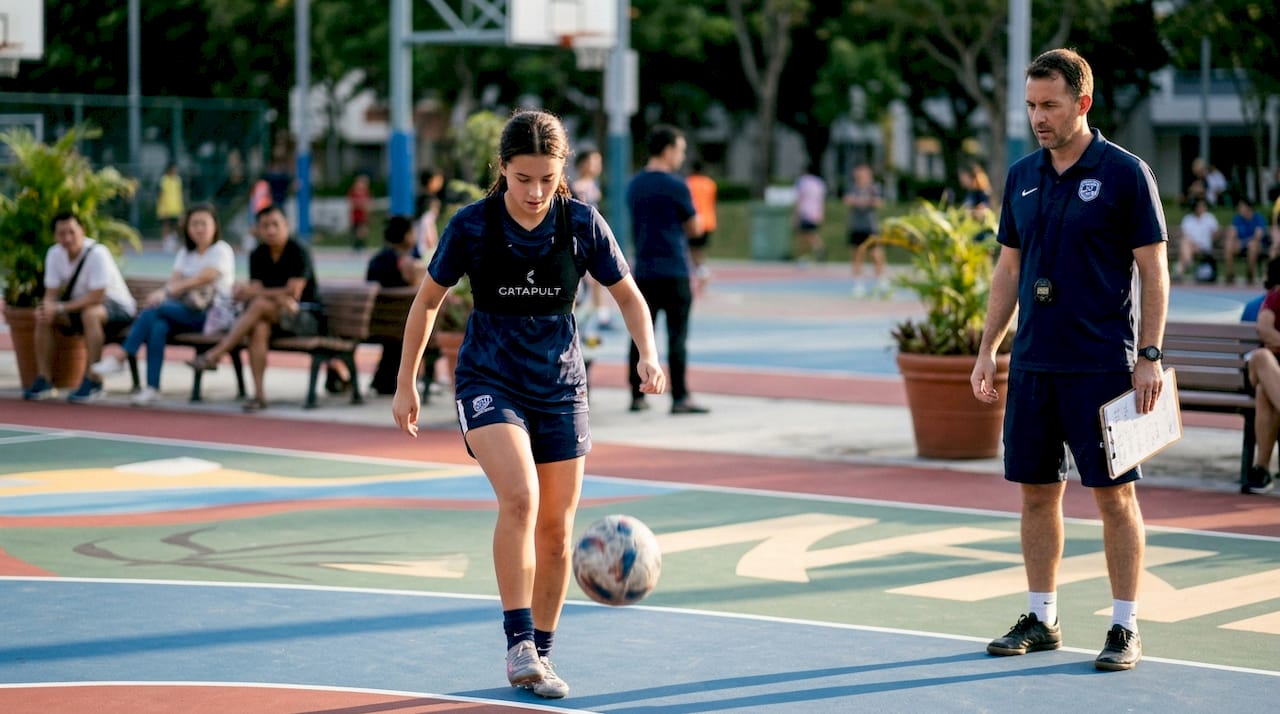
"caption": "Teen athlete training on field with coach tracking data"
},
"author": {
"url": "https://nationalscoutingbureau.com",
"name": "Nationalscoutingbureau",
"@type": "Organization"
},
"@context": "https://schema.org",
"headline": "The Role of Sports Analytics in Youth Development",
"publisher": {
"url": "https://nationalscoutingbureau.com",
"name": "Nationalscoutingbureau",
"@type": "Organization"
},
"inLanguage": "en-US",
"description": "Discover the role of sports analytics in youth development. Learn how data-driven insights enhance young athletes' skills and performance.",
"datePublished": "2026-07-10T04:38:25.915Z"
}
</script>
<h1 id="the-role-of-sports-analytics-in-youth-development" tabindex="-1">The Role of Sports Analytics in Youth Development</h1>
<p><img src="https://csuxjmfbwmkxiegfpljm.supabase.co/storage/v1/object/public/blog-images/organization-34605/1783658266520_Teen-athlete-training-on-field-with-coach-tracking-data.jpeg" alt="Teen athlete training on field with coach tracking data"></p>
<p>Sports analytics in youth development is the use of data and technology to objectively measure, track, and improve young athletes’ skills, performance, and progression pathways. This field, formally known as performance analysis, has moved well beyond the professional ranks. Today, youth programs at the club and high school level use video tracking, AI feedback, and biometric monitoring to give young players the kind of detailed feedback once reserved for college and pro rosters. For parents, understanding how these tools work and what they can realistically deliver is the first step toward making smarter decisions about your child’s athletic future.</p>
<h2 id="how-do-sports-analytics-enhance-skill-development-in-youth-sports" tabindex="-1">How do sports analytics enhance skill development in youth sports?</h2>
<p>Performance analysis gives coaches and athletes a factual record of what actually happens during training and competition. That sounds simple, but the impact is significant. <a href="https://scholarlysummit.com/journals/deei/articles/from-court-to-code-evaluating-the-impact-of-ai-driven-data-analytics" rel="nofollow noopener noreferrer" target="_blank">AI-driven data analytics</a> improved youth basketball players’ tactical awareness by 2.49 to 4.31 times baseline levels in a study of 100 young players and 30 coaches. That kind of measurable gain does not come from more practice time alone. It comes from targeted, specific feedback delivered consistently.</p>
<p>Video analytics is the most widely used tool in youth sports performance analysis. Elevated camera systems capture every movement on the field or court, including off-ball actions that a coach watching from the sideline will miss. <a href="https://www.veo.com/en-us/article/youth-soccer-academy-coaching-video-analysis" rel="nofollow noopener noreferrer" target="_blank">Video-based analytics</a> closes the feedback gap between training and match performance by giving players an objective record they can review themselves. That self-review process builds the kind of tactical awareness that separates good athletes from great ones.</p>
<p><img src="https://csuxjmfbwmkxiegfpljm.supabase.co/storage/v1/object/public/blog-images/organization-34605/1783658272283_Coach-reviewing-match-video-with-young-players.jpeg" alt="Coach reviewing match video with young players"></p>
<p>Data-driven youth training also plays a direct role in injury prevention. Advanced tracking tools monitor workload and physical stress indicators, allowing coaches to adjust training intensity before fatigue becomes injury. For young athletes whose bodies are still developing, that kind of proactive monitoring is not a luxury. It is responsible coaching.</p>
<p>Here is how analytics integrates into a well-run youth program:</p>
<ul>
<li><strong>Video review sessions</strong> where players watch their own footage and identify decision-making patterns</li>
<li><strong>AI feedback loops</strong> that flag technical errors in mechanics, footwork, or positioning after every session</li>
<li><strong>Workload monitoring dashboards</strong> that track training volume and flag overload risks week to week</li>
<li><strong>Tactical visualization tools</strong> that map player movement and spatial awareness across a full match</li>
</ul>
<p><strong>Pro Tip:</strong> <em>Ask your child’s coach whether post-game video review is part of the program. If players never watch themselves play, a significant development opportunity is being left on the table.</em></p>
<h2 id="what-performance-metrics-matter-most-in-youth-sports-analytics" tabindex="-1">What performance metrics matter most in youth sports analytics?</h2>
<p>Not all metrics are created equal, and parents deserve a clear picture of what is actually being measured. Youth sports performance analysis covers two broad categories: physical metrics and tactical metrics. Both matter, and neither tells the full story alone.</p>
<p>Physical metrics include velocity, acceleration, and movement irregularity. Research monitoring 40 sub-elite male soccer players found that <a href="https://www.frontiersin.org/journals/sports-and-active-living/articles/10.3389/fspor.2025.1720353/full" rel="nofollow noopener noreferrer" target="_blank">U13 players outperformed younger peers</a> in velocity measures, while younger players showed higher motor irregularity and acceleration frequency. That distinction matters because it tells coaches which physical qualities are age-appropriate and which represent genuine advancement.</p>
<p><img src="https://csuxjmfbwmkxiegfpljm.supabase.co/storage/v1/object/public/blog-images/organization-34605/1783658280682_Infographic-showing-youth-sports-key-performance-metrics.jpeg" alt="Infographic showing youth sports key performance metrics"></p>
<p>Tactical metrics capture on-ball and off-ball involvement, positioning decisions, and spatial awareness. These are harder to observe without video but are often the strongest predictors of long-term athletic success. A player who consistently finds space, supports teammates, and reads the game early is showing high-level tactical intelligence, and <a href="https://nationalscoutingbureau.com/blog/what-is-player-tracking-technology-for-athletes" target="_blank" rel="noopener">player tracking technology</a> can now quantify those qualities reliably.</p>
<p>One metric category that does not get enough attention from parents is biological maturity. Chronological age is a poor benchmark for youth athlete assessment. <a href="https://doi.org/10.1080/24733938.2026.2643531" rel="nofollow noopener noreferrer" target="_blank">Maturity-adjusted monitoring</a> using markers like peak height velocity gives a far more accurate picture of a young athlete’s development trajectory. A 14-year-old who is physically mature will outperform a 14-year-old who is a late developer on almost every raw metric. Without maturity adjustment, that late developer gets undervalued.</p>
<table>
<thead>
<tr>
<th>Metric category</th>
<th>Example metrics</th>
<th>Why it matters</th>
</tr>
</thead>
<tbody>
<tr>
<td>Physical output</td>
<td>Sprint velocity, acceleration, distance covered</td>
<td>Tracks athletic development and age-appropriate benchmarks</td>
</tr>
<tr>
<td>Tactical involvement</td>
<td>On-ball actions, off-ball positioning, spatial decisions</td>
<td>Measures game intelligence and decision-making growth</td>
</tr>
<tr>
<td>Biological maturity</td>
<td>Peak height velocity, skeletal age estimates</td>
<td>Ensures fair comparison and avoids premature selection bias</td>
</tr>
<tr>
<td>Workload and recovery</td>
<td>Training load, session intensity, rest ratios</td>
<td>Protects against overtraining and supports long-term health</td>
</tr>
</tbody>
</table>
<h2 id="what-are-the-real-limitations-of-sports-analytics-for-young-athletes" tabindex="-1">What are the real limitations of sports analytics for young athletes?</h2>
<p>Analytics is a powerful tool. It is not a crystal ball. Parents who walk into a youth program expecting data to predict their child’s professional future will be disappointed, and they should be skeptical of any program making that promise.</p>
<p>The core challenge is that adolescent development is nonlinear and asynchronous. A player’s physical, cognitive, and emotional growth do not advance at the same rate. <a href="https://doi.org/10.1080/24733938.2026.2683590" rel="nofollow noopener noreferrer" target="_blank">Integrated interpretative frameworks</a> stress that biological state, training exposure, and behavioral response must all be considered together. A single metric snapshot taken at age 13 tells you almost nothing reliable about potential at age 18.</p>
<p>Machine learning models are increasingly used in talent identification, and they do add value. A review of 27 studies confirmed that <a href="https://www.jssm.org/jssm-25-58.xml-Fulltext" rel="nofollow noopener noreferrer" target="_blank">ML models improve screening</a> and profiling for youth athletes. The same review was clear that these models are exploratory tools. They complement expert judgment. They do not replace it.</p>
<p>Here are the warning signs that a program is misusing analytics:</p>
<ul>
<li>Issuing definitive talent grades or rankings based solely on a single data session</li>
<li>Ignoring biological maturity when comparing athletes of the same chronological age</li>
<li>Presenting machine learning outputs as objective truth rather than decision-support inputs</li>
<li>Using data to cut or dismiss athletes rather than guide their development</li>
</ul>
<p><strong>Pro Tip:</strong> <em>When evaluating a youth analytics program, ask specifically how they account for biological maturity in their assessments. A program that cannot answer that question clearly is not using data responsibly.</em></p>
<h2 id="how-can-parents-use-sports-analytics-to-support-their-childs-growth" tabindex="-1">How can parents use sports analytics to support their child’s growth?</h2>
<p>Parents do not need to become data scientists. You do need to ask the right questions and know how to use the information you receive. The goal is to make analytics work for your child, not against their confidence or enjoyment of the sport.</p>
<ol>
<li>
<p><strong>Request a data review meeting with the coach.</strong> Analytics outputs should feed into a conversation, not arrive as a printed grade. Best developmental feedback comes from data-driven dialogue that reinforces training goals. Ask the coach to walk you through what the numbers mean and what specific adjustments are planned.</p>
</li>
<li>
<p><strong>Frame data conversations with your child around growth, not ranking.</strong> A 12-year-old who sees their sprint velocity is below average for their age group needs context, not discouragement. Explain that the number shows where to focus, not where they stand forever.</p>
</li>
<li>
<p><strong>Look for programs that use maturity-adjusted benchmarks.</strong> Chronological age comparisons can unfairly penalize late developers. Programs that use <a href="https://nationalscoutingbureau.com/blog/technology-tools-for-youth-athlete-assessment-in-2026" target="_blank" rel="noopener">maturity-adjusted assessment</a> give your child a fairer evaluation and a more accurate development roadmap.</p>
</li>
<li>
<p><strong>Use analytics to open doors with college coaches.</strong> Verified performance metrics give college programs objective data to evaluate your child before they ever step on campus. Platforms that connect athlete data to college recruitment networks turn performance analysis into a direct pathway for visibility.</p>
</li>
<li>
<p><strong>Build a tracking habit early.</strong> Consistent data over time is far more valuable than a single assessment. Encourage your child’s program to <a href="https://nationalscoutingbureau.com/blog/build-a-player-development-tracking-system-that-works" target="_blank" rel="noopener">build a tracking system</a> that follows their progress across seasons, not just snapshots from individual events.</p>
</li>
</ol>
<h2 id="key-takeaways" tabindex="-1">Key Takeaways</h2>
<p>Sports analytics in youth development delivers its greatest value when data is interpreted within a biological and coaching context, not used as a standalone ranking tool.</p>
<table>
<thead>
<tr>
<th>Point</th>
<th>Details</th>
</tr>
</thead>
<tbody>
<tr>
<td>Analytics accelerates skill growth</td>
<td>AI-driven feedback improved tactical awareness by up to 4.31 times baseline in youth basketball studies.</td>
</tr>
<tr>
<td>Maturity adjustment is non-negotiable</td>
<td>Biological maturity markers like peak height velocity give fairer, more accurate athlete assessments than age alone.</td>
</tr>
<tr>
<td>Video review builds self-awareness</td>
<td>Elevated camera footage makes off-ball actions visible and measurable, closing the gap between training and match performance.</td>
</tr>
<tr>
<td>Data supports, not replaces, coaches</td>
<td>Machine learning models are exploratory tools that complement expert judgment, not substitutes for human coaching.</td>
</tr>
<tr>
<td>Parents should ask specific questions</td>
<td>Requesting maturity-adjusted benchmarks and coach-led data reviews protects your child from misleading assessments.</td>
</tr>
</tbody>
</table>
<h2 id="what-i-have-learned-watching-analytics-reshape-youth-sports" tabindex="-1">What I have learned watching analytics reshape youth sports</h2>
<p>The most exciting shift I have seen is not the technology itself. It is the moment a 15-year-old watches their own footage and says, “I see it now.” That self-awareness is the real product of good analytics work. No coach can manufacture it through instruction alone. The data creates the mirror.</p>
<p>What concerns me is the growing number of programs that use analytics as a marketing tool rather than a development tool. They run a single assessment, generate a slick report, and hand parents a number. That is not performance analysis. That is theater. Real analytics work is ongoing, contextual, and always tied to a coaching conversation.</p>
<p>The technology is genuinely exciting. FlightScope-based velocity tracking, AI-powered video review, and maturity-adjusted benchmarking are giving youth athletes access to feedback that was unimaginable a decade ago. But the parents who get the most out of these tools are the ones who treat data as a starting point for a conversation, not an ending point for a verdict. Your child is not a number. The number is a clue. Follow the clue with curiosity, not anxiety.</p>
<blockquote>
<p><em>— Coach</em></p>
</blockquote>
<h2 id="how-nationalscoutingbureau-puts-analytics-to-work-for-your-athlete" tabindex="-1">How Nationalscoutingbureau puts analytics to work for your athlete</h2>
<p>Nationalscoutingbureau combines verified scouting with FlightScope technology to deliver the kind of performance metrics that college coaches actually use in their evaluation process. This is not a generic assessment. It is a documented, data-backed profile built to get your athlete seen.</p>
<p><img src="https://csuxjmfbwmkxiegfpljm.supabase.co/storage/v1/object/public/blog-images/organization-34605/1780261783187_nationalscoutingbureau.jpg" alt="https://nationalscoutingbureau.com"></p>
<p>Families who work with Nationalscoutingbureau earn up to 12,000 Tuition Rewards points per year, redeemable at over 400 participating colleges. With 600+ college placements and more than 20 MLB draft picks on record, Nationalscoutingbureau has a track record that speaks for itself. If you are ready to turn your child’s performance data into real recruitment opportunities, <a href="https://nationalscoutingbureau.com" target="_blank" rel="noopener">start with NSB</a> and see what verified scouting looks like in practice.</p>
<h2 id="faq" tabindex="-1">FAQ</h2>
<h3 id="what-is-sports-analytics-in-youth-development" tabindex="-1">What is sports analytics in youth development?</h3>
<p>Sports analytics in youth development is the use of data tools, video tracking, and AI feedback to measure and improve young athletes’ skills, physical performance, and tactical decision-making. It is also called performance analysis in coaching and sports science contexts.</p>
<h3 id="at-what-age-should-youth-athletes-start-using-analytics" tabindex="-1">At what age should youth athletes start using analytics?</h3>
<p>Most structured analytics programs are designed for athletes aged 12 and older, when physical and tactical patterns become consistent enough to measure meaningfully. Earlier use is possible but should focus on movement quality rather than performance rankings.</p>
<h3 id="can-sports-analytics-help-with-college-recruitment" tabindex="-1">Can sports analytics help with college recruitment?</h3>
<p>Yes. Verified performance metrics give college coaches objective data to evaluate athletes before in-person tryouts. Programs like Nationalscoutingbureau use FlightScope technology to build documented athlete profiles that directly support the <a href="https://nationalscoutingbureau.com/blog/how-to-use-technology-for-player-evaluation" target="_blank" rel="noopener">college recruitment process</a>.</p>
<h3 id="why-does-biological-maturity-matter-in-youth-sports-data" tabindex="-1">Why does biological maturity matter in youth sports data?</h3>
<p>Biological maturity markers like peak height velocity show where a young athlete is in their physical development, independent of their birth year. Without this context, late developers are routinely undervalued compared to physically advanced peers of the same chronological age.</p>
<h3 id="is-machine-learning-reliable-for-identifying-youth-talent" tabindex="-1">Is machine learning reliable for identifying youth talent?</h3>
<p>Machine learning improves screening and profiling but is not a definitive predictor. A review of 27 studies confirmed that ML models serve as decision-support tools that must be combined with expert coaching judgment to produce reliable talent assessments.</p>
<h2 id="recommended" tabindex="-1">Recommended</h2>
<ul>
<li><a href="https://nationalscoutingbureau.com/blog/technology-tools-for-youth-athlete-assessment-in-2026" target="_blank" rel="noopener">NSB Scouting | The Nation’s Fastest Growing Scouting Organization</a></li>
<li><a href="https://nationalscoutingbureau.com/blog/role-of-biomechanics-in-youth-sports-2026-guide" target="_blank" rel="noopener">NSB Scouting | The Nation’s Fastest Growing Scouting Organization</a></li>
<li><a href="https://nationalscoutingbureau.com/blog/how-to-use-technology-for-player-evaluation" target="_blank" rel="noopener">NSB Scouting | The Nation’s Fastest Growing Scouting Organization</a></li>
<li><a href="https://nationalscoutingbureau.com/blog/build-a-player-development-tracking-system-that-works" target="_blank" rel="noopener">NSB Scouting | The Nation’s Fastest Growing Scouting Organization</a></li>
</ul>