July 15, 2026 2 views news
Video Analysis in Sports Development: 2026 Guide
By BabyLoveGrowth.ai
<script type="application/ld+json">
{
"@type": "Article",
"image": {
"url": "https://csuxjmfbwmkxiegfpljm.supabase.co/storage/v1/object/public/blog-images/organization-34605/1784100108212_Coach-analyzing-athlete-video-footage-outdoors.jpeg",
"@type": "ImageObject",
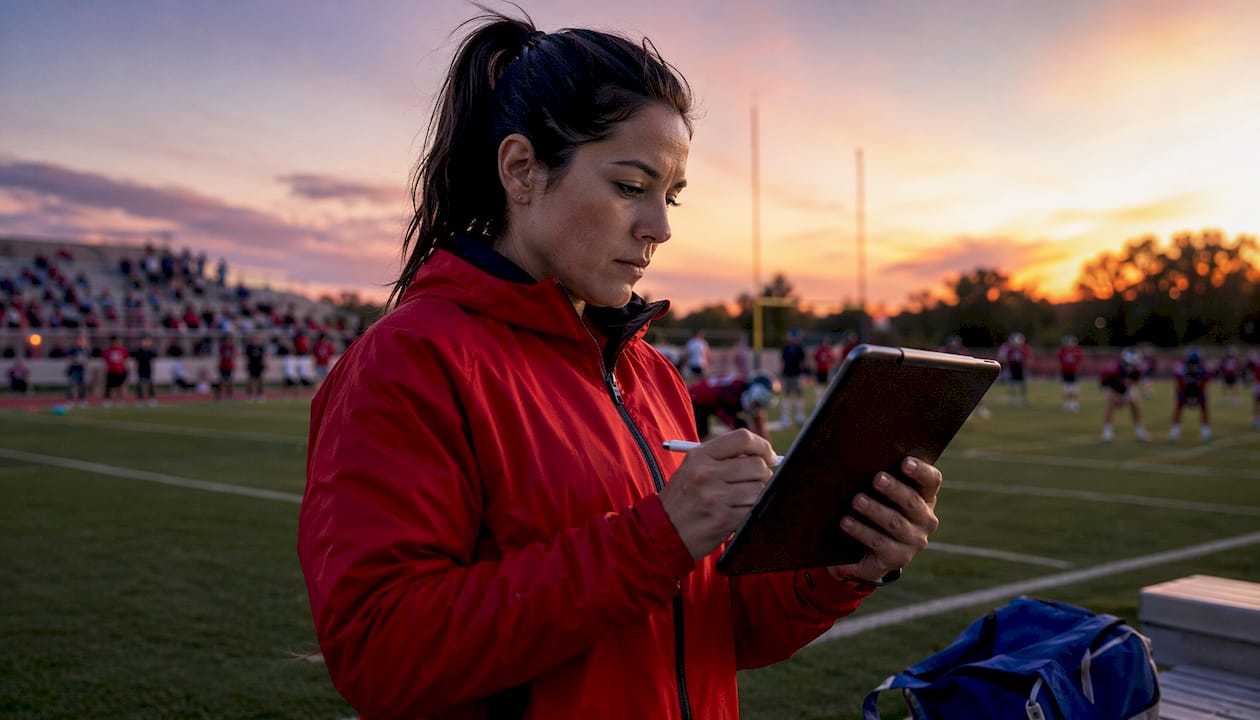
"caption": "Coach analyzing athlete video footage outdoors"
},
"author": {
"url": "https://nationalscoutingbureau.com",
"name": "Nationalscoutingbureau",
"@type": "Organization"
},
"@context": "https://schema.org",
"headline": "Video Analysis in Sports Development: 2026 Guide",
"publisher": {
"url": "https://nationalscoutingbureau.com",
"name": "Nationalscoutingbureau",
"@type": "Organization"
},
"inLanguage": "en-US",
"description": "Discover the role of video analysis in sports development. Enhance athlete performance, identify skills, and support talent with proven methods.",
"datePublished": "2026-07-15T07:32:51.463Z"
}
</script>
<h1 id="video-analysis-in-sports-development-2026-guide" tabindex="-1">Video Analysis in Sports Development: 2026 Guide</h1>
<p><img src="https://csuxjmfbwmkxiegfpljm.supabase.co/storage/v1/object/public/blog-images/organization-34605/1784100108212_Coach-analyzing-athlete-video-footage-outdoors.jpeg" alt="Coach analyzing athlete video footage outdoors"></p>
<p>Video analysis in sports development is defined as the systematic use of recorded footage and technology to measure athletic performance, identify skill gaps, and support talent recruitment. Coaches and athletes at every level now rely on this discipline, formally called performance analysis, to replace guesswork with objective evidence. A <a href="https://www.mdpi.com/2227-9067/13/5/655" rel="nofollow noopener noreferrer" target="_blank">randomized controlled trial</a> confirmed that a 6-week pre-session video observational modeling program produced significant gains in both technical performance and emotional intelligence in U14 athletes. That result tells you something powerful: the role of video analysis in sports development reaches far beyond mechanics. It shapes the whole athlete.</p>
<h2 id="how-video-analysis-improves-athlete-performance-and-skill-assessment" tabindex="-1">How video analysis improves athlete performance and skill assessment</h2>
<p>Video feedback accelerates skill acquisition faster than verbal instruction alone, particularly during early learning phases. The <a href="https://sportscoachingauthority.com/video-analysis-in-sports-coaching" rel="nofollow noopener noreferrer" target="_blank">American College of Sports Medicine</a> documents consistent technique improvements when athletes review their own footage alongside coach-guided cues. Seeing a movement error on screen creates a mental anchor that verbal correction simply cannot replicate.</p>
<p><img src="https://csuxjmfbwmkxiegfpljm.supabase.co/storage/v1/object/public/blog-images/organization-34605/1784100101097_Athlete-watching-video-feedback-with-sports-scientist.jpeg" alt="Athlete watching video feedback with sports scientist"></p>
<p>The psychological benefits run deeper than most coaches expect. That same 6-week intervention with U14 handball players showed marked emotional intelligence gains alongside shooting performance improvements. Athletes who watch themselves perform under pressure build self-awareness and composure. Those are traits that show up on game day.</p>
<p>Video analysis also bridges the gap between subjective coaching impressions and objective data. Detailed tactical, biomechanical, and psychological insights become available through footage that no coach can gather with the naked eye alone. A pitcher’s hip rotation, a receiver’s route timing, a swimmer’s flip-turn angle: these details live in the footage.</p>
<p>Key benefits of video feedback for athletes and coaches include:</p>
<ul>
<li><strong>Technique correction:</strong> Frame-by-frame review catches errors invisible at full speed, such as a hitch in a throwing motion or a collapsed knee on landing.</li>
<li><strong>Observational learning:</strong> Athletes model correct movement patterns by watching curated clips of elite performers, reinforcing motor memory.</li>
<li><strong>Longitudinal tracking:</strong> Comparing footage from week one to week twelve gives coaches objective proof of growth, not just a feeling.</li>
<li><strong>Tactical review:</strong> Team sports use video to expose defensive gaps, offensive tendencies, and situational decision-making patterns.</li>
<li><strong>Confidence building:</strong> Athletes who see their own progress on screen develop belief in their development arc.</li>
</ul>
<p><strong>Pro Tip:</strong> <em>Record every athlete from the same angle and distance each session. Consistency in camera position is the only way to make week-to-week comparisons meaningful.</em></p>
<h2 id="what-technology-powers-modern-video-analysis" tabindex="-1">What technology powers modern video analysis?</h2>
<p>The technology spectrum for video analysis now runs from a smartphone propped on a fence to a lab-grade high-speed camera shooting at 240 frames per second for precise biomechanical capture. That range matters because it means every program, regardless of budget, has a viable entry point. The gap between entry-level and professional setups has narrowed dramatically.</p>
<p>Artificial intelligence has done the most to change the game. AI now generates <a href="https://www.veo.com/article/football-nsw-video-analysis-talent-identification" rel="nofollow noopener noreferrer" target="_blank">individual player spotlight clips automatically</a>, cutting manual match footage review from over 70 minutes down to seconds. Coaches who once spent entire evenings tagging footage now spend that time coaching. That shift in time allocation is a real competitive advantage.</p>
<p><img src="https://csuxjmfbwmkxiegfpljm.supabase.co/storage/v1/object/public/blog-images/organization-34605/1784100765071_Infographic-outlining-video-analysis-workflow-steps.jpeg" alt="Infographic outlining video analysis workflow steps"></p>
<p>The frontier of video technology is markerless, AI-driven 3D body mapping. <a href="https://www.googlecloudpresscorner.com/2026-02-05-U-S-Ski-Snowboard-and-Google-Announce-Collaboration-to-Build-an-AI-Based-Athlete-Performance-Tool" rel="nofollow noopener noreferrer" target="_blank">U.S. Ski & Snowboard and Google announced a collaboration</a> in february 2026 to build an AI tool that produces elite biomechanical feedback from normal video footage, no sensor suits required. That development puts lab-quality movement analysis within reach of any athlete with a smartphone.</p>
<p>Solo athletes have also gained independence through <a href="https://pivo.ai/blogs/pivo/recording-sports-training-alone-the-complete-guide-for-athletes" rel="nofollow noopener noreferrer" target="_blank">AI auto-tracking hardware</a> that follows movement without a camera operator. Consistent, hands-free footage collection means progress tracking no longer depends on having a teammate or parent behind the lens.</p>
<p>Here is how the technology tiers stack up in practice:</p>
<ol>
<li><strong>Smartphone with AI tracking mount:</strong> Affordable, portable, and sufficient for most skill development and solo training needs.</li>
<li><strong>Tablet-based analysis apps with tagging:</strong> Mid-tier option for coaches who need to annotate and share clips with athletes in real time.</li>
<li><strong>Multi-camera broadcast setups with automated tagging:</strong> Used by club and collegiate programs for full tactical review and recruitment footage.</li>
<li><strong>High-speed cameras at 240 fps with biomechanical software:</strong> Professional standard for detailed movement mapping in elite development environments.</li>
</ol>
<table>
<thead>
<tr>
<th>Technology tier</th>
<th>Best use case</th>
<th>Approximate access level</th>
</tr>
</thead>
<tbody>
<tr>
<td>Smartphone with AI mount</td>
<td>Solo training, skill review</td>
<td>Youth and amateur</td>
</tr>
<tr>
<td>Tablet apps with tagging</td>
<td>Team sessions, coach feedback</td>
<td>Club and high school</td>
</tr>
<tr>
<td>Multi-camera automated systems</td>
<td>Tactical review, recruitment</td>
<td>Collegiate and elite club</td>
</tr>
<tr>
<td>High-speed biomechanical cameras</td>
<td>Movement analysis, injury prevention</td>
<td>Elite and professional</td>
</tr>
</tbody>
</table>
<p><strong>Pro Tip:</strong> <em>You do not need a $10,000 setup to start. A smartphone on a tripod with a free tagging app gives you 80% of the benefit for youth development work.</em></p>
<h2 id="how-does-video-analysis-support-talent-identification-and-recruitment" tabindex="-1">How does video analysis support talent identification and recruitment?</h2>
<p>Talent identification depends on consistent, comparable data. Standardized footage quality reduces friction and improves fairness when scouts and coaches compare athletes across regions and development stages. An athlete filmed from a random angle with poor lighting cannot be evaluated on the same terms as one with clean, structured footage. That gap in presentation directly affects recruitment outcomes.</p>
<p>Video analysis also expands the geographic reach of scouting. A college coach in the Midwest can evaluate a shortstop from Florida or a pitcher from California without traveling. Structured highlight reels and full-game footage, tagged by position and skill category, give recruiters the context they need to make confident decisions. <a href="https://nationalscoutingbureau.com/blog/what-is-player-tracking-technology-for-athletes" target="_blank" rel="noopener">Player tracking technology</a> built into modern platforms makes that evaluation faster and more thorough.</p>
<p>Late developers benefit most from video-supported talent programs. Athletes who peak physically after the traditional scouting window often go unnoticed without longitudinal footage that documents their growth trajectory. Video creates a record that speaks for the athlete when no scout was in the stands.</p>
<p>Key ways video analysis strengthens the recruitment process:</p>
<ul>
<li><strong>Highlight reel creation:</strong> Structured clips organized by skill category give recruiters an efficient, standardized view of an athlete’s capabilities.</li>
<li><strong>Cross-regional comparison:</strong> Consistent footage standards allow fair evaluation of athletes from different programs and geographic areas.</li>
<li><strong>Development documentation:</strong> Longitudinal footage proves growth over time, which matters to college coaches evaluating upside and coachability.</li>
<li><strong>Objective benchmarking:</strong> Video removes the subjectivity of a single live evaluation, reducing bias in talent identification.</li>
</ul>
<p>Nationalscoutingbureau uses FlightScope technology alongside structured video assessment to produce <a href="https://nationalscoutingbureau.com/blog/benefits-of-verified-performance-assessments-in-baseball" target="_blank" rel="noopener">verified performance metrics</a> that college coaches trust. That combination of video and data has contributed to more than 600 college placements and over 20 MLB draft picks.</p>
<h2 id="best-practices-for-integrating-video-analysis-into-training-programs" tabindex="-1">Best practices for integrating video analysis into training programs</h2>
<p>Video analysis yields the best results when embedded in structured periodization plans. Comparing footage from the start and end of a training block transforms subjective impressions into objective, longitudinal evidence of development. A coach who reviews footage at week one and week eight can show an athlete exactly how their mechanics have changed. That evidence builds trust and motivation.</p>
<p>Consistency in setup is non-negotiable. Inconsistent footage angles, lighting, and tagging severely limit the comparability needed for accurate progress assessment. Coaches who move the camera every session, or skip tagging under time pressure, undermine the entire feedback system. Treat your recording protocol like a training protocol: standardize it and protect it.</p>
<p>Overloading young athletes with footage is a real risk. Unguided raw video review without coaching context can cause analysis paralysis and reduce training effectiveness. Athletes need curated clips with clear coaching cues, not two hours of unedited game footage. Less footage, better framed, produces better outcomes.</p>
<p>Best practices for coaches and programs:</p>
<ul>
<li>Fix camera position, height, and angle before every session and never change it mid-block.</li>
<li>Tag clips immediately after recording so athletes receive feedback within 24 hours while the movement memory is fresh.</li>
<li>Limit each feedback session to two or three focal points. Covering ten issues at once teaches nothing.</li>
<li>Balance real-time sideline review with post-session analysis. Real-time works for tactical cues; post-session works for biomechanical detail.</li>
<li>Use <a href="https://nationalscoutingbureau.com/blog/technology-tools-for-youth-athlete-assessment-in-2026" target="_blank" rel="noopener">technology tools built for youth assessment</a> to structure feedback in age-appropriate formats that keep young athletes engaged rather than overwhelmed.</li>
</ul>
<p><strong>Pro Tip:</strong> <em>Schedule a dedicated “film session” separate from physical training. Athletes absorb video feedback better when they are not mentally and physically fatigued from practice.</em></p>
<h2 id="key-takeaways" tabindex="-1">Key Takeaways</h2>
<p>Video analysis produces measurable gains in both technical performance and athlete development when applied consistently within structured training and scouting programs.</p>
<table>
<thead>
<tr>
<th>Point</th>
<th>Details</th>
</tr>
</thead>
<tbody>
<tr>
<td>Video beats verbal instruction</td>
<td>Research confirms video feedback accelerates skill acquisition faster than verbal coaching alone, especially in early learning.</td>
</tr>
<tr>
<td>AI cuts review time dramatically</td>
<td>Automated player spotlight clips reduce manual footage review from over 70 minutes to seconds, freeing coaches to coach.</td>
</tr>
<tr>
<td>Consistency enables fair scouting</td>
<td>Standardized footage angles and tagging are required for accurate cross-regional athlete comparison and recruitment.</td>
</tr>
<tr>
<td>Embed video in training blocks</td>
<td>Comparing footage at the start and end of a training cycle creates objective evidence of athlete progress.</td>
</tr>
<tr>
<td>Avoid footage overload</td>
<td>Curated, coach-guided clips outperform raw unedited video for youth athlete development and engagement.</td>
</tr>
</tbody>
</table>
<h2 id="the-real-edge-video-gives-athletes-and-coaches" tabindex="-1">The real edge video gives athletes and coaches</h2>
<p>Here is what I have seen after years of watching athletes develop through programs that use video analysis well and programs that do not. The difference is not the camera. The difference is the culture around the footage.</p>
<p>Programs that treat video as a mirror, not a weapon, get the most out of it. When a coach shows an athlete their own mechanics without judgment, just curiosity, the athlete leans in. They start watching themselves between sessions. They start asking better questions. That self-directed learning is where the real acceleration happens.</p>
<p>The markerless AI tools arriving in 2026 excite me because they democratize what used to cost tens of thousands of dollars in sensor equipment. A kid in a rural program can now get the same quality of biomechanical feedback as an athlete at a Division I university. That is a genuine shift in access, and it will surface talent that the traditional scouting system misses entirely.</p>
<p>My honest concern is that coaches will collect more data than they can act on. The temptation to record everything and tag everything is real. But a 14-year-old does not need a 90-minute film session. They need three clear clips, two coaching cues, and a drill to fix the problem. The <a href="https://nationalscoutingbureau.com/blog/role-of-biomechanics-in-youth-sports-2026-guide" target="_blank" rel="noopener">role of biomechanics in youth sports</a> is powerful precisely because it is specific. Keep the feedback specific, keep it timely, and keep it connected to something the athlete can do tomorrow in practice.</p>
<p>Video analysis is not a replacement for great coaching. It is the best tool great coaches have ever had.</p>
<blockquote>
<p><em>— Coach</em></p>
</blockquote>
<h2 id="nationalscoutingbureau-where-video-analysis-meets-real-recruitment-results" tabindex="-1">Nationalscoutingbureau: where video analysis meets real recruitment results</h2>
<p>Athletes who produce great footage still need the right eyes on it. Nationalscoutingbureau combines advanced video assessment with FlightScope technology to generate verified performance metrics that college coaches across the country rely on.</p>
<p><img src="https://csuxjmfbwmkxiegfpljm.supabase.co/storage/v1/object/public/blog-images/organization-34605/1780261783187_nationalscoutingbureau.jpg" alt="https://nationalscoutingbureau.com"></p>
<p>With more than 600 college placements and over 20 MLB draft picks, Nationalscoutingbureau has built a track record that speaks directly to athletes and parents who want more than highlights. Families also earn up to 12,000 Tuition Rewards points per year, redeemable at over 400 participating colleges. If you are serious about getting seen by the right programs, <a href="https://nationalscoutingbureau.com" target="_blank" rel="noopener">start with Nationalscoutingbureau</a> and put professional-grade scouting behind your athlete’s development.</p>
<h2 id="faq" tabindex="-1">FAQ</h2>
<h3 id="what-is-the-role-of-video-analysis-in-sports-development" tabindex="-1">What is the role of video analysis in sports development?</h3>
<p>Video analysis in sports development is the systematic use of recorded footage and technology to measure performance, correct technique, and support talent recruitment. It replaces subjective impressions with objective, repeatable evidence that coaches and athletes can act on.</p>
<h3 id="how-does-video-feedback-improve-athletic-performance" tabindex="-1">How does video feedback improve athletic performance?</h3>
<p>Video-based feedback accelerates skill acquisition faster than verbal instruction alone, particularly in early learning phases. Athletes who review curated footage with coaching cues correct movement errors faster and retain improvements longer.</p>
<h3 id="can-video-analysis-help-with-college-recruitment" tabindex="-1">Can video analysis help with college recruitment?</h3>
<p>Consistent, well-structured footage is a direct recruitment asset. College coaches use video to evaluate athletes across regions without traveling, and standardized footage quality ensures fair comparison between players from different programs.</p>
<h3 id="what-technology-do-i-need-to-start-using-video-analysis" tabindex="-1">What technology do I need to start using video analysis?</h3>
<p>A smartphone with an AI tracking mount is sufficient for most youth development needs. Professional programs use multi-camera setups or high-speed cameras at 240 fps, but the entry point for meaningful feedback is far more accessible than most coaches realize.</p>
<h3 id="how-often-should-coaches-review-video-with-athletes" tabindex="-1">How often should coaches review video with athletes?</h3>
<p>Coaches should schedule dedicated film sessions separate from physical training, focusing on two or three focal points per session. Overloading young athletes with unguided raw footage reduces effectiveness and can cause analysis paralysis.</p>
<h2 id="recommended" tabindex="-1">Recommended</h2>
<ul>
<li><a href="https://nationalscoutingbureau.com/blog/role-of-biomechanics-in-youth-sports-2026-guide" target="_blank" rel="noopener">NSB Scouting | The Nation’s Fastest Growing Scouting Organization</a></li>
<li><a href="https://nationalscoutingbureau.com/blog/technology-tools-for-youth-athlete-assessment-in-2026" target="_blank" rel="noopener">NSB Scouting | The Nation’s Fastest Growing Scouting Organization</a></li>
<li><a href="https://nationalscoutingbureau.com/blog/peak-performance-window-for-athletes-2026-guide" target="_blank" rel="noopener">NSB Scouting | The Nation’s Fastest Growing Scouting Organization</a></li>
<li><a href="https://nationalscoutingbureau.com/blog/youth-baseball-speed-and-agility-tests-2026-guide" target="_blank" rel="noopener">NSB Scouting | The Nation’s Fastest Growing Scouting Organization</a></li>
</ul>