June 5, 2026 22 views news
What Is Player Tracking Technology for Athletes?
By BabyLoveGrowth.ai
<script type="application/ld+json">
{
"@type": "Article",
"image": {
"url": "https://csuxjmfbwmkxiegfpljm.supabase.co/storage/v1/object/public/blog-images/organization-34605/1780653858378_Athlete-wearing-GPS-tracking-vest-indoors.jpeg",
"@type": "ImageObject",
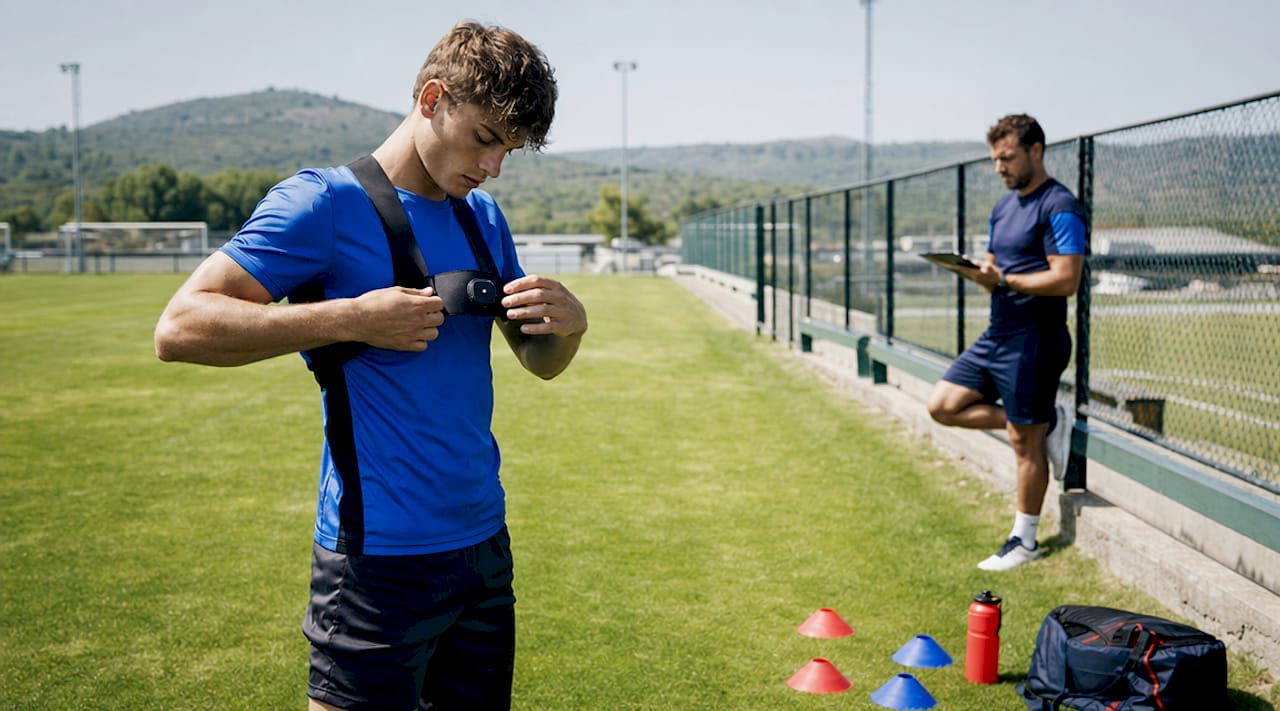
"caption": "Athlete wearing GPS tracking vest indoors"
},
"author": {
"url": "https://nationalscoutingbureau.com",
"name": "Nationalscoutingbureau",
"@type": "Organization"
},
"@context": "https://schema.org",
"headline": "What Is Player Tracking Technology for Athletes?",
"publisher": {
"url": "https://nationalscoutingbureau.com",
"name": "Nationalscoutingbureau",
"@type": "Organization"
},
"inLanguage": "en-US",
"description": "Discover what player tracking technology is and how it transforms athlete performance analysis, helping coaches and parents make informed decisions.",
"datePublished": "2026-06-05T10:05:53.406Z"
}
</script>
<h1 id="what-is-player-tracking-technology-for-athletes" tabindex="-1">What Is Player Tracking Technology for Athletes?</h1>
<p><img src="https://csuxjmfbwmkxiegfpljm.supabase.co/storage/v1/object/public/blog-images/organization-34605/1780653858378_Athlete-wearing-GPS-tracking-vest-indoors.jpeg" alt="Athlete wearing GPS tracking vest indoors"></p>
<p>Player tracking technology is defined as the capture and analysis of athlete movement, position, and physical output using sensors, cameras, and inertial measurement units to generate data coaches and scouts can act on. Systems like KINEXON, Polar Team Pro, and FIFA’s optical tracking platform have moved this from broadcast novelty to everyday coaching tool. Whether you’re a parent watching your kid grind through summer ball or a coach trying to manage a pitcher’s workload, understanding how this data gets collected and what it actually tells you is no longer optional. It’s the new scouting language.</p>
<h2 id="what-is-player-tracking-technology-and-how-does-it-work" tabindex="-1">What is player tracking technology and how does it work?</h2>
<p><a href="https://knowledged.net/tracking-player-performance-a-guide-for-sports-analysts" rel="nofollow noopener noreferrer" target="_blank">Player tracking technology</a> measures an athlete’s location, speed, acceleration, and movement patterns over time, turning raw sensor data into analysis-ready trajectories. The output includes x/y position coordinates, sprint counts, acceleration loads, and event tags that coaches can compare across games and practices. Think of it as a GPS map layered with a physical effort log, updated in real time.</p>
<p>Four core technologies power modern player tracking systems, and each has a distinct role.</p>
<p><strong>GPS and GNSS wearables</strong> are the most common entry point for teams at every level. Standard consumer GPS delivers meters-level accuracy, which is fine for distance and speed. Advanced RTK GNSS systems push that to <a href="https://www.auroranav.com/gnss-knowledge/rtk-gnss-explained/" rel="nofollow noopener noreferrer" target="_blank">centimeter-level accuracy</a> in real time, which matters when you’re measuring lateral cuts or first-step explosiveness. Hardware setup affects reliability significantly. Testing in youth sports found the best intraclass correlation coefficient at 20 meters receiver distance (ICC 0.73), meaning where you place your base station is not a small detail.</p>
<p><strong>Optical tracking systems</strong> use stadium or gym camera arrays combined with AI-based computer vision to generate real-time position data. FIFA’s optical platform uses multi-camera triangulation and pose estimation to track players at high frame rates, supporting features like <a href="https://inside.fifa.com/innovation/innovating-the-game/optical-player-and-ball-tracking" rel="nofollow noopener noreferrer" target="_blank">semi-automated offside calls</a>. For FIFA 2026, skeletal tracking maps 29 body points at 100 frames per second, and the connected smart ball transmits motion data <a href="https://www.euronews.com/next/2026/06/01/ai-avatars-and-smart-footballs-inside-fifas-high-tech-2026-world-cup" rel="nofollow noopener noreferrer" target="_blank">500 times per second</a>. That level of precision turns officiating from a judgment call into a data call.</p>
<p><img src="https://csuxjmfbwmkxiegfpljm.supabase.co/storage/v1/object/public/blog-images/organization-34605/1780653845572_Stadium-mounted-optical-tracking-cameras-overhead.jpeg" alt="Stadium-mounted optical tracking cameras overhead"></p>
<p><strong>Inertial measurement units (IMUs)</strong> sit inside wearable vests or pods and capture micro-movements, orientation changes, and contact forces that GPS alone misses. They’re the reason a tracking system can tell the difference between a player jogging and a player decelerating hard after a sprint.</p>
<p><strong>Computer vision tracking</strong> uses a method called <a href="https://www.sportsfirst.net/post/best-ai-models-for-player-tracking-and-ball-tracking-in-usa-sports" rel="nofollow noopener noreferrer" target="_blank">tracking-by-detection</a> to maintain each player’s identity across video frames. This is not the same as simple object detection. Maintaining identity through overlapping players and uniform similarity is what makes possession stats and event analysis trustworthy.</p>
<table>
<thead>
<tr>
<th>Technology</th>
<th>Data captured</th>
<th>Accuracy</th>
<th>Cost range</th>
<th>Best use case</th>
</tr>
</thead>
<tbody>
<tr>
<td>GPS/GNSS wearables</td>
<td>Distance, speed, sprint count</td>
<td>Meters to centimeters</td>
<td>Low to mid</td>
<td>Field sports, outdoor training</td>
</tr>
<tr>
<td>RTK GNSS</td>
<td>Position, acceleration</td>
<td>Centimeter-level</td>
<td>Mid to high</td>
<td>Elite outdoor performance</td>
</tr>
<tr>
<td>Optical/camera systems</td>
<td>Position, pose, ball tracking</td>
<td>High (multi-camera)</td>
<td>High</td>
<td>Broadcast, officiating, tactics</td>
</tr>
<tr>
<td>IMUs</td>
<td>Orientation, contact, micro-movement</td>
<td>High (local)</td>
<td>Low to mid</td>
<td>Biomechanics, load monitoring</td>
</tr>
<tr>
<td>Computer vision</td>
<td>Identity, event, possession</td>
<td>Varies by setup</td>
<td>Mid to high</td>
<td>Video analysis, scouting</td>
</tr>
</tbody>
</table>
<p><img src="https://csuxjmfbwmkxiegfpljm.supabase.co/storage/v1/object/public/blog-images/organization-34605/1780653946607_Infographic-comparing-wearable-and-vision-player-tracking-technology.jpeg" alt="Infographic comparing wearable and vision player tracking technology"></p>
<p><strong>Pro Tip:</strong> <em>Never mix GPS and optical data in the same KPI report without normalizing for sensor type. Different hardware yields slightly different values, and comparing them directly will skew your workload trends.</em></p>
<h2 id="how-does-player-tracking-data-benefit-performance-and-recruitment" tabindex="-1">How does player tracking data benefit performance and recruitment?</h2>
<p>The practical payoff of sports performance tracking shows up in three places: workload management, technical analysis, and recruitment visibility.</p>
<p>GPS and IMU data give coaches <a href="https://p1athlete.com/blog/sports-gps-tracker/" rel="nofollow noopener noreferrer" target="_blank">load metrics</a> like top speed, sprint counts, and acceleration load that make training decisions concrete rather than intuitive. Prep school programs use weekly load targets to guide return-to-play timelines and adjust training volume before it becomes an injury. That’s not guesswork. That’s a number telling you a player has hit 110% of their weekly sprint quota and needs a down day.</p>
<p>Video and pose estimation data support technical and tactical analysis. A pitcher’s arm path, a shortstop’s first-step direction, a point guard’s defensive positioning. These are the details that separate a good eye from a documented evaluation. When a college coach asks for film, attaching <a href="https://nationalscoutingbureau.com/blog/how-to-share-performance-reports-digitally-for-recruitment" target="_blank" rel="noopener">digital performance reports</a> with tracked metrics alongside video gives that footage real weight.</p>
<p>Here’s what player analytics delivers for each group in the athlete ecosystem:</p>
<ul>
<li><strong>Coaches</strong> get objective workload data to prevent overtraining and identify players who perform differently under fatigue</li>
<li><strong>Scouts and recruiters</strong> get standardized metrics that travel across time zones and don’t depend on who was watching on a given Saturday</li>
<li><strong>Parents</strong> get transparent, data-backed progress reports that replace vague coach feedback with measurable benchmarks</li>
<li><strong>Athletes</strong> get self-awareness. Knowing your top sprint speed dropped 4% over a three-week stretch is information you can train against</li>
<li><strong>Medical staff</strong> get early warning signals from acceleration load spikes before a soft-tissue injury becomes a season-ender</li>
</ul>
<p>Data transparency is the underrated advantage here. Parents who understand what the numbers mean can have sharper conversations with coaches and make better decisions about training programs and recruitment timelines.</p>
<h2 id="what-are-the-challenges-in-using-player-tracking-reliably" tabindex="-1">What are the challenges in using player tracking reliably?</h2>
<p>Player tracking data is only as good as the setup behind it. Most data quality problems come from <a href="https://bishtref.com/articles/10.1177/17543371261432888" rel="nofollow noopener noreferrer" target="_blank">hardware and connectivity issues</a>, not algorithm failures. Bluetooth receiver distance, antenna placement, and device calibration all affect GPS measurement reliability more than most coaches realize. Fix the setup before you trust the numbers.</p>
<p>Computer vision systems face a specific challenge called identity re-identification. When two players overlap on camera or wear nearly identical uniforms, the system can swap their identities across frames. That single error cascades into wrong possession stats, wrong sprint attribution, and wrong event tagging. Optical systems like those used by FIFA overcome this through <a href="https://ubitrack.eu/" rel="nofollow noopener noreferrer" target="_blank">multi-camera triangulation</a> and AI recognition, but lower-budget setups need human review checkpoints built into the workflow.</p>
<p>Consistent KPI selection matters more than chasing the most advanced metric. Using the same workload KPIs across weeks and seasons is what makes comparisons meaningful. Switching from one sensor brand to another mid-season without recalibrating your benchmarks is like changing the scale you weigh yourself on and expecting the trend line to hold.</p>
<p><strong>Pro Tip:</strong> <em>Build a short hardware checklist before every session: receiver placement, device charge level, and firmware version. Five minutes of setup discipline saves hours of data cleanup.</em></p>
<h2 id="what-options-exist-for-youth-and-amateur-athletes" tabindex="-1">What options exist for youth and amateur athletes?</h2>
<p>Player tracking is no longer exclusive to professional franchises. <a href="https://sportsperformancetracking.com/" rel="nofollow noopener noreferrer" target="_blank">Over 100,000 athletes across 6,900 teams worldwide</a> now use some form of performance tracking technology, and a growing share of those are youth and amateur programs. The technology spectrum is wide enough to fit a high school baseball team’s budget and a Division I program’s demands.</p>
<p>For youth athletes, simplified GPS wearables are the most practical starting point. Devices worn in a vest pocket or clipped to a waistband capture distance, speed, and sprint data without requiring a camera crew or a stadium. The data isn’t centimeter-precise, but it’s accurate enough to track weekly load trends and flag athletes who are consistently outworking their peers.</p>
<p>Entry-level computer vision solutions have also arrived for amateur settings. Automatic camera tracking systems mount to a tripod or bleacher rail and follow the action without an operator. The tradeoff is accuracy. Single-camera setups can’t triangulate position the way a multi-camera array does, and identity persistence across occlusions is harder to maintain. For a coach who wants game film with basic movement overlays, it works. For a scout building a recruitment dossier, it needs supplementing.</p>
<p>Key considerations for youth and amateur programs:</p>
<ul>
<li><strong>Device management</strong> is a real operational challenge. Charging 15 GPS vests before a 7 a.m. practice requires a system, not an afterthought</li>
<li><strong>Data literacy</strong> among coaches and parents determines whether the numbers get used or ignored</li>
<li><strong>Cost-to-accuracy tradeoff</strong> means entry-level GPS is useful for trend monitoring but not precise enough for biomechanical analysis</li>
<li><strong>Privacy and consent</strong> for minors using wearable devices requires clear communication with families before deployment</li>
</ul>
<p>Exploring <a href="https://nationalscoutingbureau.com/blog/technology-tools-for-youth-athlete-assessment-in-2026" target="_blank" rel="noopener">youth athlete assessment tools</a> built specifically for development contexts helps coaches avoid buying professional-grade systems that overwhelm their actual needs.</p>
<h2 id="key-takeaways" tabindex="-1">Key takeaways</h2>
<p>Player tracking technology delivers its greatest value when hardware setup, consistent KPIs, and identity-preserving data collection work together to produce reliable, comparable athlete metrics over time.</p>
<table>
<thead>
<tr>
<th>Point</th>
<th>Details</th>
</tr>
</thead>
<tbody>
<tr>
<td>Core definition</td>
<td>Player tracking captures position, speed, and movement using GPS, IMUs, optical cameras, and computer vision.</td>
</tr>
<tr>
<td>Technology tradeoffs</td>
<td>RTK GNSS offers centimeter accuracy outdoors; optical systems excel indoors and for pose analysis but cost more.</td>
</tr>
<tr>
<td>Performance benefits</td>
<td>Load metrics from GPS and IMU data guide training volume, injury prevention, and return-to-play decisions.</td>
</tr>
<tr>
<td>Data quality first</td>
<td>Hardware setup and consistent KPI selection matter more than algorithm sophistication for reliable results.</td>
</tr>
<tr>
<td>Youth accessibility</td>
<td>Over 100,000 athletes on 6,900 teams use tracking technology, proving it scales well below the professional level.</td>
</tr>
</tbody>
</table>
<h2 id="the-numbers-dont-lie-but-they-dont-coach-either" tabindex="-1">The numbers don’t lie, but they don’t coach either</h2>
<p>I’ve watched coaches get handed a dashboard full of sprint counts and acceleration loads and freeze. The data was clean. The insight wasn’t there yet. That’s the gap nobody talks about enough.</p>
<p>Player tracking technology gives you a language. Learning to speak it fluently takes time and repetition. The coaches who get the most out of these systems aren’t the ones with the most expensive hardware. They’re the ones who picked three KPIs, tracked them religiously for a full season, and built enough context to know when a number is telling them something real versus when it’s noise.</p>
<p>The recruitment angle is where I see the biggest missed opportunity for families. Parents invest in showcases and travel ball, but they don’t invest in documenting what their athlete actually does. A college coach reviewing 200 prospects doesn’t remember the kid who threw hard at a camp in July. They remember the kid who showed up with a tracked performance history that told a story across 18 months.</p>
<p>The technology is ready. The question is whether the athlete’s support system is organized enough to use it. That’s not a technology problem. That’s a preparation problem, and it’s entirely solvable.</p>
<blockquote>
<p><em>— Coach</em></p>
</blockquote>
<h2 id="how-nationalscoutingbureau-puts-tracking-data-to-work-for-your-athlete" tabindex="-1">How Nationalscoutingbureau puts tracking data to work for your athlete</h2>
<p>Nationalscoutingbureau combines verified scouting with FlightScope technology to generate precise performance metrics that college coaches actually trust. NSB has facilitated 600+ college placements and more than 20 MLB draft picks by pairing hard data with direct coach relationships.</p>
<p><img src="https://csuxjmfbwmkxiegfpljm.supabase.co/storage/v1/object/public/blog-images/organization-34605/1780261783187_nationalscoutingbureau.jpg" alt="https://nationalscoutingbureau.com"></p>
<p>Families who work with NSB earn up to 12,000 Tuition Rewards points per year, redeemable at over 400 participating colleges. That means the same process that gets your athlete seen by recruiters also builds real financial value for your family. If you’re ready to put performance data behind your athlete’s recruitment, <a href="https://nationalscoutingbureau.com" target="_blank" rel="noopener">start with NSB</a> and see how verified tracking metrics change the conversation with college programs.</p>
<h2 id="faq" tabindex="-1">FAQ</h2>
<h3 id="what-is-player-tracking-technology-in-sports" tabindex="-1">What is player tracking technology in sports?</h3>
<p>Player tracking technology is the use of GPS wearables, optical cameras, IMUs, and computer vision to capture and analyze athlete movement, position, and physical output during games and practices. It turns motion data into metrics coaches and scouts use for performance evaluation and recruitment decisions.</p>
<h3 id="how-does-player-tracking-work-at-the-youth-level" tabindex="-1">How does player tracking work at the youth level?</h3>
<p>Youth programs typically use simplified GPS wearables that capture distance, speed, and sprint counts without requiring camera infrastructure. Accuracy is lower than professional RTK GNSS systems, but the data is sufficient for monitoring weekly training loads and identifying standout athletes.</p>
<h3 id="what-are-the-main-benefits-of-player-tracking-for-recruitment" tabindex="-1">What are the main benefits of player tracking for recruitment?</h3>
<p>Player tracking creates a documented performance history with standardized metrics that travel with the athlete to every showcase, camp, and college visit. Scouts and college coaches can compare tracked data across prospects rather than relying solely on subjective observation.</p>
<h3 id="how-is-player-data-collected-during-a-game" tabindex="-1">How is player data collected during a game?</h3>
<p>Data is collected through wearable GPS and IMU devices worn by athletes, optical camera arrays that triangulate position using AI, and connected equipment like smart balls that transmit motion data hundreds of times per second. Each method captures different data types and suits different environments and budgets.</p>
<h3 id="what-accuracy-can-coaches-expect-from-gps-tracking" tabindex="-1">What accuracy can coaches expect from GPS tracking?</h3>
<p>Standard consumer GPS delivers meters-level accuracy, adequate for distance and speed trends. Advanced RTK GNSS systems achieve centimeter-level accuracy in real time, but measurement reliability also depends on hardware setup factors like receiver placement and Bluetooth distance.</p>
<h2 id="recommended" tabindex="-1">Recommended</h2>
<ul>
<li><a href="https://nationalscoutingbureau.com/blog/technology-tools-for-youth-athlete-assessment-in-2026" target="_blank" rel="noopener">NSB Scouting | The Nation’s Fastest Growing Scouting Organization</a></li>
<li><a href="https://nationalscoutingbureau.com" target="_blank" rel="noopener">NSB Scouting | The Nation’s Fastest Growing Scouting Organization</a></li>
<li><a href="https://nationalscoutingbureau.com/blog/how-athletic-participation-unlocks-tuition-benefits" target="_blank" rel="noopener">NSB Scouting | The Nation’s Fastest Growing Scouting Organization</a></li>
<li><a href="https://nationalscoutingbureau.com/blog/how-to-share-performance-reports-digitally-for-recruitment" target="_blank" rel="noopener">NSB Scouting | The Nation’s Fastest Growing Scouting Organization</a></li>
</ul>